
Key Takeaways
Verification is a routine part of opening and maintaining a CFD account in Australia, though the exact steps differ by provider. Preparing clear, consistent documents can make the process easier to navigate.
- Providers use identity checks to confirm who is applying and assess compliance obligations.
- Photo ID and proof of address are common requests, but accepted documents vary.
- Some applications involve a selfie, video, or digital identity check.
- Mismatched details, recent changes, or complex circumstances can prompt follow-up questions.
- Use official channels, respond promptly, and ask the provider what is needed if a check is delayed.
Why CFD providers verify Australian accounts
A provider may ask you to verify your identity before allowing certain account activity. The checks help it understand who is applying and whether the account details make sense. For CFD account verification KYC Australia, the specific steps depend on the provider and your circumstances. It is useful to know what the checks are for before gathering documents.
What KYC checks are designed to confirm
Know Your Customer (KYC) checks are intended to establish that an applicant is who they say they are. A provider may compare identity details with submitted documents and ask for information needed to assess an application. This can also help identify inconsistencies that need clarification. The review is about the account holder and the application, not a judgment about a person’s trading ability.
How identity checks relate to Australian AML/CTF rules
Australian anti-money laundering and counter-terrorism financing (AML/CTF) requirements can apply to providers that fall within the relevant rules. These obligations may include establishing and verifying customer identity, alongside other checks appropriate to the circumstances. Requirements are not identical for every business or account. A provider’s instructions are therefore the best guide to what it needs from you.
The role of ASIC regulation and broker-specific policies
ASIC regulates financial services and markets in Australia, while AML/CTF responsibilities may involve separate legal requirements. A provider’s regulatory position and internal procedures can shape its onboarding process, but they do not make every document requirement universal. For a practical example of what one provider says about identity confirmation, see IG Australia. Read the information that applies to the entity and account you are actually applying for.
Why verification may happen before trading or withdrawals
A provider may request verification during account opening, before particular services are available, or later when circumstances call for it. The timing can depend on its procedures and applicable obligations. Completing a check early may help avoid interruptions when you want to use an account feature. Ask the provider directly if you are unsure whether verification is needed before trading or making a withdrawal.
Documents you may need to provide
The documents requested depend on the provider, the account, and the details in your application. Common requests include identity documents and evidence of where you live. Check the provider’s instructions before submitting anything, since age limits, document types, and image requirements can differ. Gathering the right versions first can save a round of follow-up.
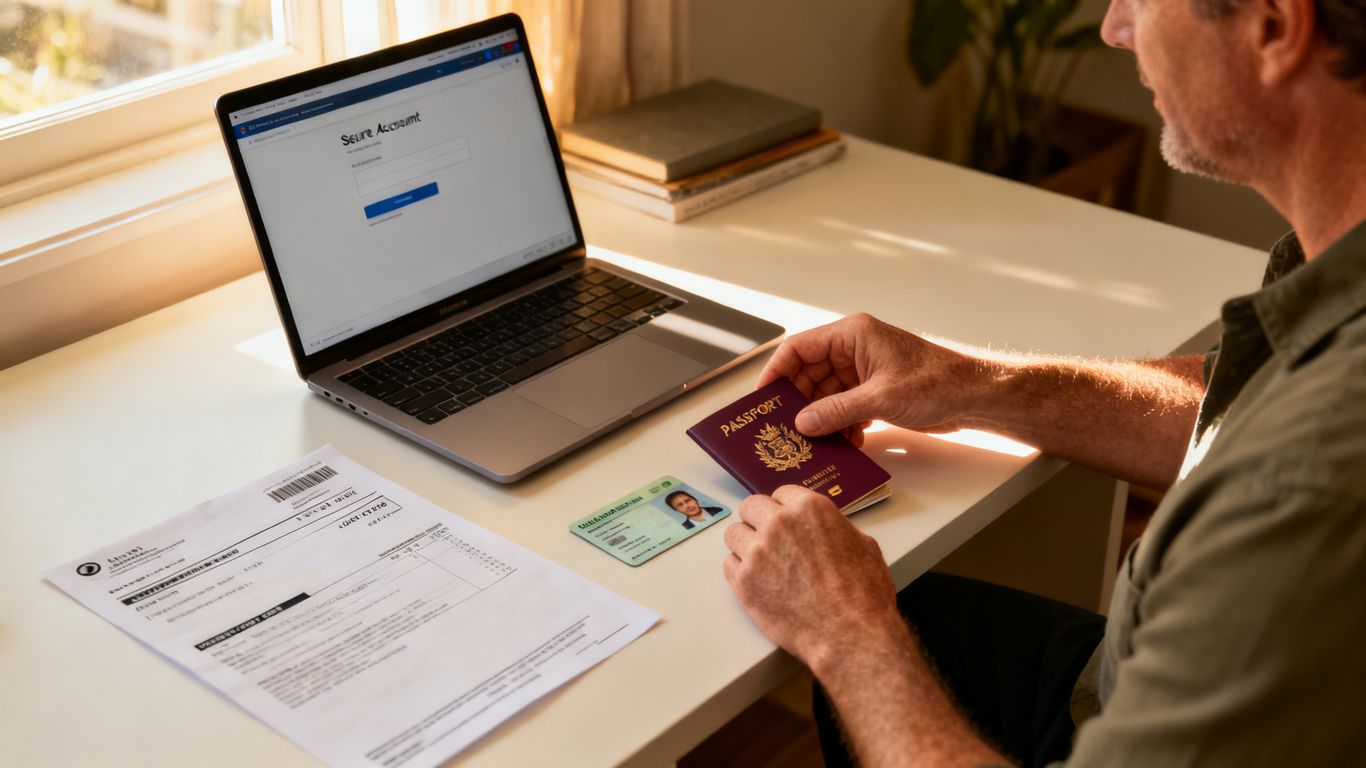
Common forms of government-issued photo ID
A provider may accept a current passport, driver’s license, or another government-issued photo ID, subject to its own rules. The document typically needs to be readable and show the details the provider asks to verify. This Global Prime guide, for example, describes identity and address documents its process may require. It is an example of one provider’s stated requirements, not a rule that applies to every account.
Acceptable proof of address and document date limits
Proof of address is often used to check that the residential address on an application is supported by a document. Depending on the provider, examples may include a utility bill or bank statement, but accepted options and how recent the document must be can vary. The table below gives common examples to help you identify what to check in the provider’s current instructions.
| Document type | Details to check | Common limitation |
|---|---|---|
| Utility bill | Name and residential address | May need to be recent |
| Bank statement | Name, address, and statement date | Some providers limit acceptable formats |
| Government correspondence | Name and address | Not accepted by every provider |
Treat these as examples rather than a universal list. The Pepperstone information, for instance, describes document criteria for that provider, so use it only as an illustration and confirm your own provider’s rules before uploading documents.
When a broker may request tax or residency details
A provider may ask about tax residence or other residency details where those details are relevant to its account-opening or compliance procedures. The questions may differ depending on where you live, the type of account, and the information already supplied. Answer accurately and ask the provider what a field means if it is unclear. Do not assume that a request from one provider will be made by all others.
Why requirements can vary between providers
Providers can use different document standards, verification methods, and review procedures. Requirements may also vary with the applicant’s situation or the information available to the provider. That is why a document accepted elsewhere may not meet the current request. Checking the specific list and file instructions before submission is more reliable than relying on someone else’s experience.
What happens during the verification process
The process usually starts with an application and a request for supporting information. It may then include an automated or manual review, with a follow-up if something is missing or unclear. Some checks are completed online, while others require additional contact. Each provider sets its own sequence and communicates its decision through its chosen channels.
Entering your personal details and submitting documents
You will generally enter personal details such as your name and address, then provide documents requested by the provider. Make sure these details match the documents as closely as possible, and follow the requested file type and upload instructions. Before submitting, check that all pages are included and legible. Small errors, such as a transposed digit or an old address, can lead to questions.
Completing a selfie, video, or digital identity check
Some providers may ask you to take a selfie, record a short video, or complete a digital identity check. These steps can help compare the applicant with an identity document or confirm that the person is present during the process. Follow the on-screen guidance and use adequate lighting if taking a photo or video. If the method is inaccessible or fails repeatedly, contact the provider for an alternative.
How brokers review applications and communicate decisions
A review may involve comparing the application with submitted documents and checking whether the information is complete. The provider may approve the account, request clarification, or explain that a document needs to be replaced. Keep an eye on the email address and account messages you supplied, while taking care to confirm that any request is genuine. A request for more information does not necessarily mean the application has been rejected.
What to expect from processing times
Processing times vary with the provider, document quality, application volume, and whether extra checks are needed. A provider may give an estimate, but it should not be treated as a guarantee. If the stated period has passed, check for messages and confirm that all requested materials were received. A concise follow-up can help establish whether anything remains outstanding.
Situations that can require extra checks
Most applications do not follow precisely the same path. A detail that is hard to reconcile, a recent change, or a more involved residency arrangement may lead to additional questions. This does not automatically indicate a problem; it can simply mean the provider needs more information before proceeding. Responding clearly and consistently can help the review move forward.
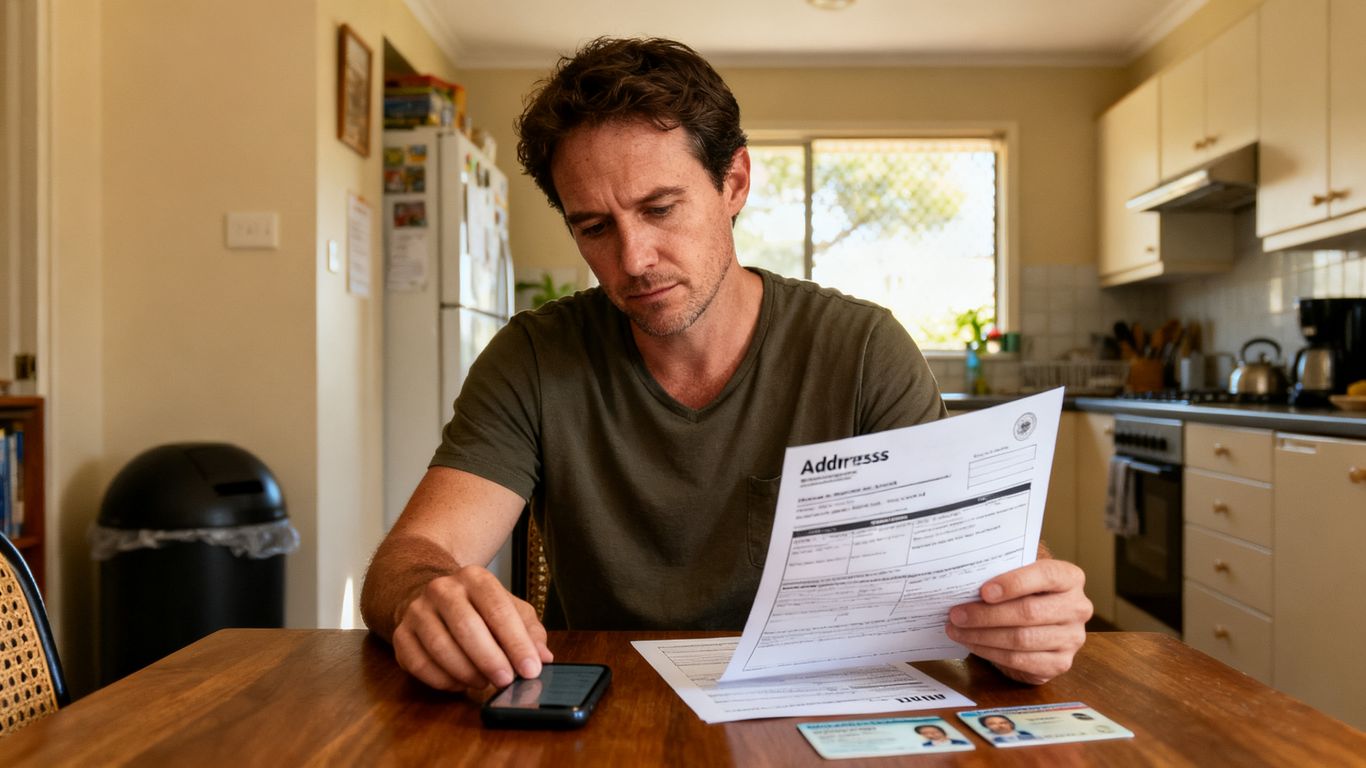
Differences between your application and identity documents
A difference between the application and an identity document can prompt a request for clarification. Examples include a middle name appearing on one document but not another, or an address that has not been updated. Explain the discrepancy plainly and provide supporting information if requested. Avoid submitting altered documents or guessing at details; ask the provider how it wants the difference handled.
Applying with a temporary address or recently changed name
Temporary accommodation, a recent move, or a name change may make it harder to match application details to existing records. The provider may ask for another document or an explanation of the change. If your name has changed, use the provider’s instructions to determine whether evidence of the change is needed. Explain your current circumstances rather than entering details that no longer apply.
When a broker may ask about source of funds
A provider may ask questions about the source of funds in circumstances where its checks call for more context. It may want to understand where money used for an account comes from, and it may request supporting information. The exact questions and acceptable evidence depend on the provider and situation. Answer only what is asked, accurately, and use a secure channel to provide sensitive material.
Additional checks for complex residency or ownership arrangements
Applications involving more than one country of residence, unusual documentation, or an account structure that is not straightforward may need extra review. The provider may ask you to clarify which address or residency details apply, or who is authorized to act on the account. Give a clear account of the arrangement and follow the specific instructions provided. If the request is confusing, ask for clarification before sending unrelated documents.
How to resolve delays or a rejected verification
A delay or declined document can often be addressed by identifying what the provider could not confirm. Read the notice carefully and distinguish between a rejected document and a rejected application; they are not necessarily the same. If the instructions are unclear, ask the provider which item needs attention and what alternatives it accepts. Keep copies of your submission and any correspondence.
Common reasons documents are declined
Documents may be declined if they are expired, incomplete, difficult to read, or do not meet the provider’s stated criteria. A cropped image, glare, an obscured detail, or a name that does not match the application can also create problems. Sometimes the issue is simply that the document type is not accepted. Check the precise reason in the message rather than sending the same file again without changes.
Submitting clearer images or alternative documents
If image quality is the issue, retake the photo in good light and include the full document with its corners visible. If the document itself is not accepted, ask which alternatives are allowed. A short pre-submission review can catch common problems:
- Confirm the document is current and belongs to you.
- Check that every requested page or side is included.
- Make sure names, dates, and addresses are readable.
- Use the file format and upload method requested by the provider.
These checks do not guarantee approval, but they can reduce avoidable resubmissions. If an alternative document is needed, wait for the provider’s guidance instead of guessing which one it will accept.
Responding to requests for more information
Answer each question directly and provide only the supporting material requested, unless the provider asks for more. If a detail has changed since the application, explain what changed and when. Keep your response consistent with the documents already submitted. If you cannot provide a requested item, say so and ask whether another form of evidence is acceptable.
When and how to contact the broker’s support team
Contact support if the stated processing period has passed, the instructions conflict, or you cannot complete a requested check. Use the contact details in the provider’s official website or account portal, and include a brief description of the issue and any reference number. Do not send full identity documents through an unverified address. A specific question is more likely to produce a useful next step than a general request for an update.
Protecting your information and maintaining verification
Verification involves personal information, so the way you submit it matters. Use the provider’s approved routes, review its privacy information, and keep your contact and account details current. Approval does not always mean the provider will never ask another question. A later review may be needed if details change or if the provider’s procedures require it.
Checking that you are using the broker’s official channels
Reach the provider through its official website or a secure account portal, rather than a link in an unexpected message. Check the web address carefully and be cautious if a sender asks you to share documents through an unfamiliar channel. If a request seems unusual, contact the provider using contact information you find independently. Do not share passwords or one-time security codes as part of an identity check.
Understanding how personal information may be handled
Read the provider’s privacy notice to understand how it says personal information is collected, used, stored, or shared. The details and applicable protections depend on the provider and relevant law. If you are unsure why a particular document is needed, ask how it relates to the verification request. Share information through the requested secure process and avoid sending extra sensitive material without a reason.
Keeping account details and documents up to date
Tell the provider when important account details change, such as your address or legal name, and follow its process for updating them. Keep relevant documents current and retain confirmation of changes you submit. This makes it easier to respond if the provider later asks you to reconfirm information. If you move or change your name while an application is pending, notify the provider rather than leaving inconsistent details unexplained.
Why a provider may repeat checks after account approval
A provider may repeat or update checks after approval if account information changes or its procedures require a review. It may also need to resolve a new discrepancy or confirm details before certain account activity. A request for renewed information does not necessarily mean the original approval has been reversed. Read the notice and ask what prompted the new request if the reason is not clear.
Conclusion
CFD account verification is easier to manage when you understand the purpose of the checks, follow the provider’s current document instructions, and respond carefully to requests for clarification. Requirements differ, so use official channels and ask for guidance when something does not fit your circumstances.
Frequently Asked Questions
What does KYC mean for a CFD account?
KYC means Know Your Customer. In an account-opening context, it refers to checks a provider uses to establish who is applying and assess relevant information.
Which documents are commonly requested for verification in Australia?
Providers commonly request government-issued photo ID and proof of address. Accepted documents and any age or format limits depend on the provider.
Can I open a CFD account before my identity is verified?
That depends on the provider and the account process. Some may require verification before enabling account activity, while others may request checks at a different point.
How long does CFD account verification usually take?
There is no single timeframe for every provider. Document quality, application volume, and additional questions can all affect how long a review takes.
Why might a provider ask for another document?
A provider may need another document if the first one is unclear, incomplete, outside its accepted criteria, or does not resolve a mismatch in the application.
What should I do if my verification is delayed?
Check your account messages and email for requests, confirm that your documents were received, and contact support through official channels if the stated processing period has passed.
Is it safe to email identity documents to a provider?
Use the provider’s approved secure submission method wherever possible. If you receive an email request, verify it through the provider’s official website or account portal before sending sensitive information.