
Key Takeaways
Wheat and agricultural CFDs offer exposure to price movements without owning crops, but the details and risks vary by provider and contract. A careful approach starts with understanding those details before committing money.
- A CFD is a financial contract, not ownership of wheat or another crop.
- Contract size, pricing method, expiry, and trading costs vary by provider.
- Weather, crop conditions, inventories, trade flows, and currency movements can affect agricultural prices.
- A written plan can help set entry, exit, and position-size rules before a trade is placed.
- Leverage can magnify losses, and stop-loss orders may not prevent slippage or losses from price gaps.
How wheat and agricultural CFDs work
A wheat CFD lets a trader take a position on price movements without handling physical grain. Agricultural contracts can differ in how they are priced, when they expire, and what costs apply, so the product details matter as much as the market view. For anyone exploring wheat and agricultural CFD trading Australia, the first step is to understand what the contract does—and what it does not do.
Understand the difference between CFDs and owning commodities
A CFD is an agreement based on the change in an underlying market price between opening and closing a position. It does not give the trader ownership of wheat, a claim to a physical delivery, or responsibility for storing or transporting grain. That distinction makes the instrument financial rather than a way to buy the crop itself.
The result is exposure to price changes, not possession of a commodity. A position can be opened with a view that the market will rise or fall, but either direction can produce a loss if the price moves against the trade. A general guide to wheat CFD trading offers another explanation of this distinction and the costs and risks that can accompany CFDs.
Learn how contract size, pricing and expiry work
Before placing an order, find out how much market exposure one contract represents and how the provider calculates its quoted price. The contract may refer to a particular market or futures price, and its terms can specify an expiry or rollover process. These contract specifications shape both the potential gain or loss and the time horizon of the position.
A short comparison can help show which details to check before trading. The terms below are not universal; the provider’s own documentation is what determines how a specific CFD works.
| Contract detail | What to check | Why it matters |
|---|---|---|
| Contract size | Exposure represented by one unit | Helps calculate the effect of a price move |
| Price reference | Market or futures price used | Clarifies what the quoted price follows |
| Expiry | Whether and when the contract ends | Affects how long the position can remain open |
| Rollover | How a position is treated near expiry | May affect price and costs |
Use the table as a prompt for reading the product terms, not as a substitute for them. If a specification is unclear, pause and ask the provider before opening a position.
Compare cash and futures-based CFD pricing
A cash-based CFD generally follows a market price without a fixed futures expiry in the same way that a dated contract does, while a futures-based CFD follows a specified futures contract. The names and exact mechanics can vary, so check what price the provider is quoting and how it handles contract changes. A futures-based price may reflect the particular expiry being referenced rather than a single timeless wheat price.
That difference can matter if a position stays open for weeks or months. A change in the referenced futures contract may affect the quoted price, and providers may use different methods to handle the transition. Compare the product documents and current pricing details before deciding which type fits the intended holding period.
See how leverage affects your exposure
Leverage means that the amount needed to open a position can be smaller than the full market exposure. It does not reduce the size of a price move on the position itself: both gains and losses are calculated against the exposure, not simply the cash initially set aside. A small move in wheat can therefore have a more pronounced effect on the funds committed to the trade.
Margin requirements and account protections depend on the product and provider. Avoid treating the initial margin as a measure of the most you can lose, and calculate what a move against the position could mean before placing an order. If that possible loss would disrupt essential finances, the position is too large.
What moves wheat and agricultural markets
Agricultural markets respond to conditions that change expected supply and demand. Weather and crop development can shift estimates during a growing season, while trade patterns and inventories provide clues about availability. These factors can change quickly, and prices may react to new information before the full impact on harvests is known.
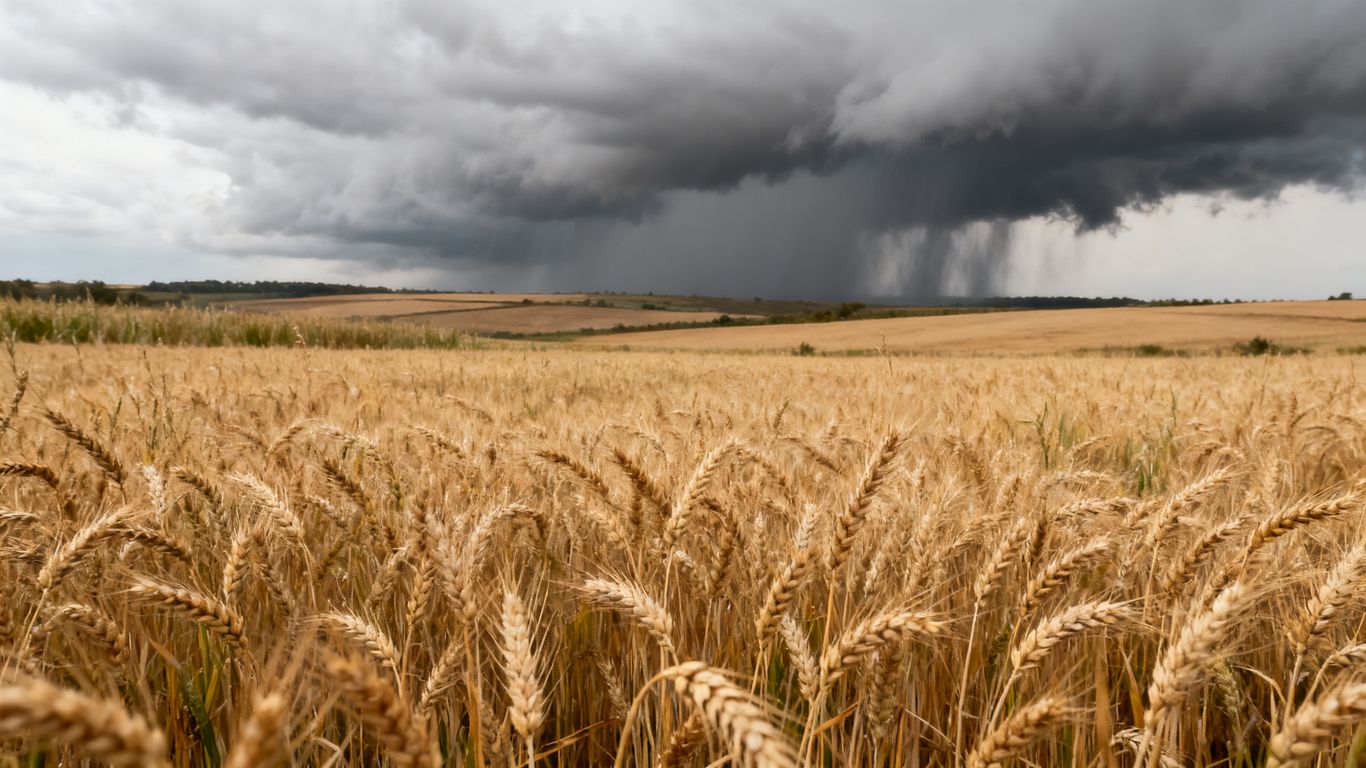
Track weather, planting and harvest conditions
Planting dates, rainfall, temperature, and harvest progress can all influence expectations for a crop. Poor conditions in a major growing region may raise concern about yields; favorable conditions can ease that concern. The market response depends on what was already expected, how much production may be affected, and whether other regions can offset a shortfall.
Weather is not a simple trading signal. A forecast may change, and the same weather event can affect regions differently. It is more useful to follow developments over time and compare them with the crop’s stage of growth than to react to a single headline.
Follow crop reports, inventories and export data
Reports on crop progress, production, stocks, and exports help traders assess whether supply is likely to meet demand. For instance, data that point to changing inventories or export activity can alter expectations even when the weather has been steady. A useful agricultural market research overview discusses the kinds of crop and supply-and-demand reports market participants may follow.
Treat each release as one piece of evidence rather than a forecast on its own. It can help to note the market expectation before a report, then compare that expectation with the published figures and the price response. This keeps the analysis focused on what changed instead of assuming any one number determines direction.
Consider currency movements and global supply chains
Wheat is bought and sold across borders, so currency movements can affect the relative cost of exports and imports. Transport disruptions, changes in trade policy, or interruptions to shipping can also influence how readily grain reaches buyers. Those forces may matter alongside harvest conditions, particularly when supply is concentrated or trading routes are under strain.
Currency effects are not always straightforward: a move in one exchange rate can matter differently to exporters, importers, and buyers in different regions. Keep the market’s pricing currency in view and consider how international developments might alter expected supply, demand, or costs of delivery.
Compare wheat with other agricultural markets
Other crops can offer context, but they are not interchangeable with wheat. Corn, soybeans, and other agricultural markets have their own growing regions, uses, seasonal patterns, and supply conditions. A broad commodity market overview can help frame how agricultural products sit alongside other commodity markets, while the specific crop still needs its own research.
A compact comparison can help organize what to watch before drawing conclusions about one market:
- Note the crop’s main growing regions and the current stage of its season.
- Check whether inventories and export activity are changing.
- Compare relevant price moves without assuming crops will move together.
- Record which new information would change your view of the market.
The point is not to track every crop at once. A focused comparison can reveal when markets share a supply concern and when their price moves are being driven by different conditions.
Choosing a CFD provider in Australia
A provider affects the contract terms, pricing, account process, and access to markets. Australian readers should confirm that the provider is appropriately regulated for the services it offers and should read the relevant documents before funding an account. Do not choose a product on the basis of its name alone; compare the precise terms that apply to the trade you intend to make.
Check the provider’s Australian financial services licence
Confirm the provider’s regulatory status through appropriate Australian sources and make sure the entity you are dealing with matches the one named in the documentation. A familiar website name is not enough; the legal entity and the services covered by its authorization matter. If you cannot confirm those details, do not assume that an account or product is suitable.
Regulation does not remove trading risk or make a particular CFD appropriate for every person. It is one part of due diligence, alongside understanding the product, the provider’s terms, and your own capacity for loss.
Review available agricultural markets and contract specifications
Check which agricultural markets are offered and whether the provider offers cash-based or futures-based CFDs. Then review the contract size, minimum order, price reference, trading hours, expiry, and any rollover treatment. The available markets and terms can differ, so avoid assuming that specifications for one crop apply to another.
It is also worth checking whether prices are shown in a currency different from the currency of your account. Exchange-rate effects can influence the account result as well as the underlying commodity move. Keep a copy of the current specifications so you can refer to them when reviewing a trade.
Compare spreads, commissions and overnight funding
The difference between a buy and sell price, any commission, and overnight funding can all affect the net result. A position held for longer may face costs that are less visible when first opening the trade. Review how the charges are calculated and whether they can change with market conditions or the position type.
Look at costs in the context of your intended timeframe rather than comparing a single figure in isolation. The cheapest-looking entry may not represent the lowest total cost if other charges apply. Product documentation should explain the relevant fees, but ask for clarification if the calculation is difficult to follow.
Read product disclosure and risk documents before opening an account
Read the product disclosure statement and risk information before depositing money or placing a trade. These materials should explain the contract, key risks, and costs, including details that may not be obvious from a trading screen. Take time to understand how the product works when markets move sharply or a position is held overnight.
If a term is unclear, resolve that uncertainty first. A decision made after reading the documents is more considered than one based only on a brief product description or a price chart.
Building a beginner trading plan
A plan gives a beginner a way to make decisions before emotions take over. It need not predict every market turn; it should set boundaries for what to trade, what information to follow, and how much risk to accept. Begin with a narrow focus and adjust the plan only after reviewing actual decisions and outcomes.

Choose a market and timeframe that suit your experience
Pick a market you can research consistently and a timeframe you can realistically monitor. A short-term position may require more frequent attention, while a longer holding period brings more exposure to overnight charges and new information. Your available time and understanding should guide the choice, not a desire to trade every price movement.
It can help to start with one market and a simple observation routine. Learn how its contract is priced, when key data tends to arrive, and what conditions have been moving it recently. Adding more markets before those basics are familiar can make it harder to tell which factor is driving a decision.
Use an economic calendar and reliable agricultural data
A calendar helps identify scheduled releases that could affect prices, while agricultural data provides context for supply and demand. Use sources that clearly identify the date, region, and measure being reported. For global markets, compare information from more than one relevant source when practical, and keep a record of when it was published.
Market research is more useful when it is organized than when it is simply collected. A consistent routine might include:
- Check the calendar for upcoming reports and market events.
- Review recent weather, planting, harvest, and inventory updates.
- Note export or trade developments relevant to the crop.
- Write down what information would invalidate your current view.
This sequence turns research into a repeatable process. It also makes it easier to notice when a trade idea rests on old information or an assumption that has changed.
Set entry, exit and position-size rules in advance
Decide what would justify opening a position, what would show the idea is no longer valid, and how much exposure you can afford before entering. A trading plan can include a target, a maximum acceptable loss, and rules for avoiding a trade when conditions are unclear. Position size should follow the loss limit, rather than being chosen first and rationalized afterward.
Write the rules in plain language. If you cannot explain why you would enter and what would make you exit, the trade idea may not be ready. This does not guarantee a good result, but it gives you a clear basis for assessing whether you followed your own process.
Practise on a demo account before trading with real money
A demo account can help you learn order entry and understand how a platform displays prices and positions without placing a real-money trade. Practice should include reading the contract details, entering and changing orders, and checking how a hypothetical position behaves as prices move. The experience is useful for learning the mechanics, though it cannot fully recreate the pressure of risking real funds.
Treat practice as a test of your routine, not evidence that a strategy will work in live markets. Keep notes on missed checks and confusing terms, and revisit the provider’s documentation when needed. Only consider trading with real money once you understand the product and can accept the potential loss.
Managing risk when trading agricultural CFDs
Agricultural prices can move quickly when weather, crop data, or trade developments change expectations. CFDs add the effects of contract terms, margin, and costs to that underlying market risk. A risk process cannot prevent losses, but it can help make the possible downside visible before a position is opened.
Calculate potential losses before placing a trade
Estimate how a price move against you would affect the full exposure, and include relevant costs in the calculation. The amount you deposit to open a CFD does not necessarily cap the loss. Check the provider’s rules and account terms, and consider whether a plausible adverse move could exceed what you are prepared to lose.
Use conservative assumptions rather than relying on a single ideal exit price. If the position is too large to manage within your risk limit, reduce the size or do not place the trade. The calculation should be clear enough that you can explain it before committing funds.
Use stop-loss orders with an understanding of slippage
A stop-loss order may help define when a position should close if the market moves against it, but it is not a promise that the trade will close at the exact trigger price. In fast or thin markets, the execution price can differ from the level selected. That difference, known as slippage, can increase a loss compared with the initial estimate.
Check whether the provider offers different stop-order types and how each is handled. A stop can support a risk plan, but it cannot replace sensible position sizing or account for every sudden price move.
Avoid taking on more leverage than you can afford
High leverage can make a small market move produce a large change in account equity. Resist the temptation to size a trade according to the maximum exposure a platform allows. Instead, work backward from the loss you could tolerate and keep enough capacity to handle ordinary price fluctuations.
Do not add to a losing position simply to make the average entry price look better. Reassess the original reasoning and follow the exit rules written before the trade. If those rules no longer fit the situation, close or reduce the position rather than letting a sunk cost drive the next decision.
Account for gaps and volatility around crop reports
Prices can move sharply after a report or other event, and markets may not trade continuously at every price. If the market opens beyond a stop level, the order may execute at a different price than expected. The risk is especially relevant when a position is held through a scheduled release or overnight period.
Before a report, decide whether holding the position still fits your plan. You may choose to reduce exposure or stay out, but the decision should reflect your risk tolerance and the contract terms rather than a guess that the market will react in one direction.
Placing and reviewing trades
A disciplined trade begins before the order is sent and continues after it is open. Confirm the instrument, size, direction, and costs, then monitor the position against the plan rather than reacting to every small price change. Reviewing decisions afterward helps separate a sound process from a fortunate outcome.
Check the contract details before submitting an order
Confirm the market name, contract type, size, currency, price reference, expiry, and trading hours on the order screen. Check whether the trade will incur a spread, commission, funding charge, or rollover treatment. A quick review can catch a mismatch between the market you intended to trade and the product actually selected.
If a detail differs from what you expected, stop and check the provider’s documents before proceeding. Do not rely on memory when contract terms may vary by market or change over time.
Choose between market, limit and stop orders
A market order is generally intended to execute promptly at available prices, while a limit order specifies a price boundary for entry or exit. A stop order is triggered when a stated level is reached, though execution can be affected by market conditions. The exact order types and handling depend on the provider and the instrument.
Choose the order that fits the plan rather than selecting one by habit. In a fast market, a market order may fill at a different price than the latest quote; a limit order may not fill at all. Read the order details and understand the trade-off before confirming.
Monitor open positions and funding charges
Review the position regularly against the reason it was opened, the planned exit, and the amount of risk still acceptable. Check for new information that could change the market view and keep track of any overnight funding or other charges that accrue. More monitoring is not always better if it leads to impulsive decisions, so use a schedule that fits the timeframe.
If the market changes, compare the new facts with the original plan. A position should not remain open merely because it is already open; reassess it on its current merits and account for the cost of holding it.
Keep a trading journal and review results regularly
A journal can record the market, direction, entry and exit, position size, costs, reason for the trade, and whether you followed your plan. Include what you expected to happen and what actually changed. Over time, this record can reveal recurring mistakes, such as entering before data releases or overlooking funding costs.
Review a group of trades rather than drawing a conclusion from one result. A profitable trade can still reflect poor risk management, while a loss can occur despite following a careful process. Use the review to improve the decisions you control, not to promise yourself that future markets will behave the same way.
Conclusion
Trading agricultural CFDs begins with understanding the contract and the market behind it. Research, a written plan, and careful attention to position size can help a beginner approach wheat and other crop markets more deliberately, but they cannot remove the risk of losing money. Take the time to check the provider’s terms and decide what level of risk is acceptable before placing a trade.
Frequently Asked Questions
What is a wheat CFD?
A wheat CFD is a financial contract that provides exposure to changes in a wheat price without giving the trader ownership of physical grain. Its pricing, costs, and terms depend on the provider and contract.
Can a trader lose more than the initial amount set aside?
The initial margin is not necessarily the maximum possible loss. Losses depend on the position’s exposure, market movement, costs, and the account terms, so read the provider’s risk documents and calculate potential losses before trading.
What can move wheat prices?
Weather, planting and harvest conditions, crop estimates, inventories, exports, currencies, and trade disruptions can all influence wheat prices. Markets may react to how new information compares with expectations.
What is the difference between cash and futures-based CFDs?
A cash-based CFD and a futures-based CFD can refer to different underlying pricing methods. Futures-based products relate to a specified futures contract, while cash-based pricing may not use the same fixed expiry structure; exact terms vary by provider.
Do agricultural CFDs have expiry dates?
Some contracts are linked to futures expiries, while other pricing structures may not have a fixed expiry in the same way. Check the contract specifications for expiry and any process used to manage a position as a contract changes.
Can a stop-loss order guarantee an exit price?
No. A stop-loss can be triggered at a chosen level, but fast markets or price gaps can lead to execution at a different price. The possibility of slippage should be included in a risk plan.
What should a beginner check before opening a wheat CFD trade?
Check the provider’s regulatory status, contract size, price reference, expiry, costs, and order terms. Also decide in advance how much you can afford to lose and whether the position fits your trading plan.