
Key Takeaways
For most Australians, real-money CFD trading begins at 18, not before. Age checks, account ownership and the risks of leveraged products all matter, so a parent’s permission generally does not change the position.
- Licensed providers generally require CFD account holders to be at least 18.
- CFDs use leverage and margin, which can magnify losses quickly.
- A parent cannot usually make an under-18 person the lawful user of an adult account.
- Demo accounts and market education are practical alternatives before 18.
- At 18, check licensing, costs, product risks and eligibility before trading.
Australia’s minimum age rules for CFD trading
Australia does not have one simple “CFD age law” that answers every account question in isolation. In practice, licensed providers set eligibility rules around adulthood, identity and contractual capacity. That is why anyone researching CFD trading for under 18 Australia will usually find the same practical answer: an under-18 person cannot open and operate a standard retail CFD account.
Why CFD accounts generally require you to be 18 or older
A CFD account is a financial contract, not simply an app login. The provider needs a customer who can enter the agreement, understand its obligations and be responsible for deposits, losses, margin requirements and fees. For that reason, standard retail account applications generally require the applicant to confirm they are 18 or older and to provide evidence of identity and age.
The rule is also separate from whether someone has watched trading tutorials or appears financially sophisticated. Experience may help later with suitability, but it does not usually replace the minimum-age condition.
How Australian financial services laws apply to minors
Australian financial services regulation is designed around disclosure, conduct and client protections, while ordinary contract principles also matter when a customer is a minor. A provider must be able to identify the client and establish a valid relationship with that client. Those requirements make informal arrangements particularly unsuitable for derivatives trading.
CFDs are speculative products whose value is linked to price movements rather than ownership of the underlying asset. A useful CFD trading guide can explain the mechanics, but education alone does not create eligibility to open an account.
The role of licensed CFD providers and account verification
A licensed provider normally checks the applicant’s name, date of birth, address and identity documents before allowing full account access. Verification is not a box-ticking exercise: it helps the provider comply with its obligations and confirm who is responsible for the account. The applicant may also need to answer questions about experience, objectives and financial circumstances.
For example, information published about IG Australia describes CFDs as complex instruments and directs prospective clients to documents such as a Product Disclosure Statement and risk disclosures. That kind of material is useful for understanding the product, but it does not turn an under-18 applicant into an eligible client.
Why parental consent usually does not override age requirements
A parent or guardian may consent to many everyday activities, but that does not usually authorise a minor to become the named holder of a retail CFD account. The provider’s agreement, verification process and product rules still apply. If the adult is the true account holder, the child’s trading activity may also conflict with the provider’s terms.
The safest assumption is simple: ask the provider directly rather than relying on a social-media claim or a workaround. Consent may be relevant to some financial arrangements, but it is not a general exemption from a broker’s minimum-age rule.
Why brokers restrict CFD trading for under-18s
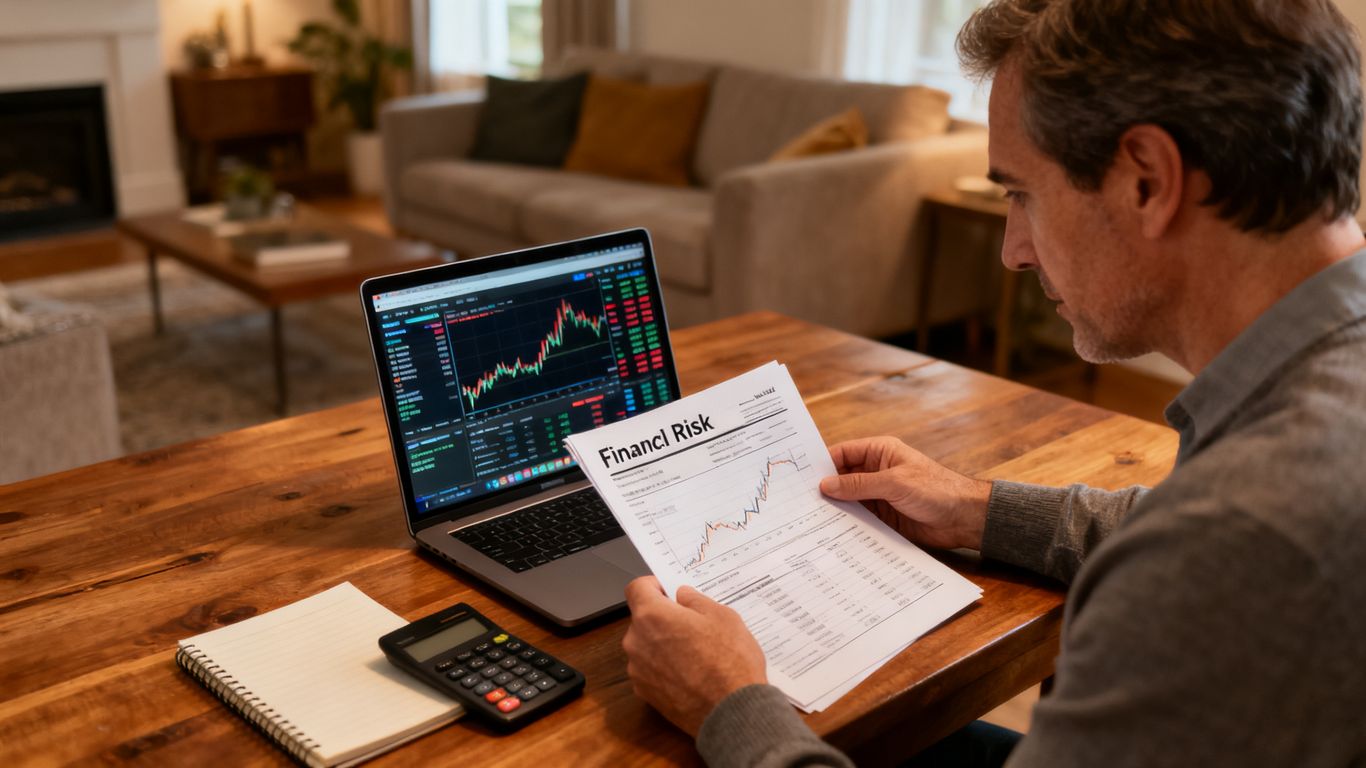
The restriction is not only about a date on an application form. CFDs combine a binding contract with leverage, margin and fast-moving markets, so providers need a clear adult customer relationship. These features create legal, operational and consumer-protection concerns when the proposed user is a minor.
Contractual capacity and enforceability
The account agreement sets out duties on both sides, including how orders are handled, how margin is calculated and what happens if a position loses value. A provider needs confidence that the named customer can enter that agreement and be held responsible for its terms. A minor’s contractual position can be more complicated, which is one reason standard CFD providers avoid opening accounts for them.
This is not fixed by putting a different birth date into an application. The issue concerns the underlying relationship between the customer and provider, not just the appearance of compliance on a screen.
The risks of leverage and margin trading
Leverage allows a relatively small deposit to control a larger market exposure. That can make a small price movement produce a substantial change in the account, and a falling position can require more funds or be closed by the provider. Losses can accumulate quickly, particularly when a new trader does not understand position size or margin.
The risk is not merely theoretical. A provider’s risk notice may warn that CFDs can result in rapid losses, while ASIC-related guidance and educational material commonly encourage new investors to understand volatility before trading. A minor may have limited income and experience to absorb those consequences.
Identity checks, responsible lending and client classification
The provider must know who the customer is and may need to assess whether the product is appropriate for the intended retail client. Date-of-birth checks, identity documents and questions about trading experience all help establish that picture. An under-18 application cannot simply be treated as an ordinary adult application because another person offers to fund it.
The broad checks a broker may make include:
- confirming the applicant’s identity and date of birth;
- checking the source and ownership of deposited funds;
- asking about financial knowledge and trading experience;
- explaining product risks, costs and account obligations.
These checks do not guarantee that an adult will be approved, but they show why an under-18 application is not a routine account-opening issue. The information must be accurate and supplied by the person who is actually applying.
What can happen if someone provides false age details
Using a false date of birth or someone else’s identity information can trigger a failed verification, restricted access or account closure. A provider may review trades and transactions, and it may delay withdrawals while it establishes who opened and used the account. False information can also create privacy and fraud concerns beyond the trading account itself.
Trying to bypass an age rule can therefore leave the user with less protection, not more. It is far safer to wait and use the time to learn without risking someone else’s money or identity.
Can a parent or guardian open or manage a CFD account?
This question often comes from families trying to give a young person practical market experience. The key distinction is between an adult owning an account for their own purposes and a minor using that account as though it were theirs. Those are not interchangeable arrangements, and the provider’s terms decide what activity is permitted.
The difference between account ownership and authorised access
If a parent opens an account, the parent is generally the named customer and remains responsible for the account. That does not automatically give a child permission to place orders, receive account credentials or make trading decisions. Authorised access, where available, must be approved under the provider’s procedures and may still exclude CFD dealing.
A parent should not assume that funding an account or supervising a child changes who is trading. The provider may treat the person placing orders as the effective user and regard undisclosed access as a breach of its terms.
Why joint, custodial and trust accounts may not permit CFD trading
A joint, custodial or trust structure can have different legal and tax features, but its name does not automatically make leveraged derivatives available to a minor. The provider may restrict the products offered, require particular documentation or refuse the structure altogether. A trust account also involves duties that go beyond simply holding money for a child.
Approval of an account structure is not the same as approval to trade every product. Families should obtain written confirmation of the exact account type, permitted users and permitted instruments before transferring funds.
When a parent’s account activity could breach broker terms
Problems can arise when a child uses a parent’s password, trades while the parent is absent or makes decisions that the parent then submits without disclosing the arrangement. Even if the parent accepts the financial risk, the activity may not match the account agreement or the provider’s identity checks.
The consequences can include an investigation, position closure or limits on the account. The parent may also find it difficult to show that orders, instructions and risk decisions came from the named customer.
Questions to ask a broker before attempting to open an account
A direct conversation with the provider is more reliable than assuming that a custodial label or a parent’s approval solves the issue. Ask about the minimum age, who may place orders and whether the proposed account type permits CFDs for the intended purpose. Keep the answer and any relevant documents for your records.
Useful questions include whether demo access is available to a minor, what identification is required at 18, and whether an adult may provide education without giving the child trading access. Clear answers can prevent an expensive misunderstanding.
What under-18 Australians can do instead
Being unable to open a live CFD account does not mean a young person has to wait without learning anything. Market concepts can be studied safely, and practice can focus on decisions rather than profit. The aim is to build patience and understanding before real money and contractual obligations enter the picture.

Practising with a demo account
A demo account can allow someone to explore order types, charts and position management using simulated funds, where the provider makes that facility available. It does not reproduce every emotional or financial pressure of live trading, but it can reveal whether the user understands basic mechanics.
A demo should be treated as practice rather than proof of readiness. Results made with simulated money do not establish that a person can manage real losses, overnight costs or rapid market movements.
Learning about markets without using real money
A sensible study routine can cover what a CFD is, how a price movement affects a position, what spread and financing costs mean, and why margin matters. Reading product explanations and risk disclosures is more useful than copying a stranger’s trade online. ASIC’s warning for first-time investors is a helpful reminder that newer participants may underestimate volatility and complexity.
It is also worth comparing explanations from several educational sources without treating any one article as personal financial advice. The purpose at this stage is to ask better questions, not to find a shortcut to profits.
Comparing shares, ETFs and CFDs at a basic level
Shares and ETFs can involve ownership interests or units in an investment vehicle, while a CFD is a derivative linked to price movements and does not give ownership of the underlying asset. The products can therefore differ in voting rights, costs, risk and how a loss develops. The table below is a starting comparison, not a recommendation.
| Feature | Shares | ETFs | CFDs |
|---|---|---|---|
| Basic exposure | Ownership in a company | A basket or fund interest | A contract linked to price movement |
| Ownership of underlying | Generally yes | Generally through the fund structure | No |
| Leverage | Not inherent in a cash purchase | Not inherent in a cash purchase | Commonly part of the product |
| Main learning focus | Company value and diversification | Holdings, fees and diversification | Margin, leverage and position risk |
The comparison shows why CFDs need a separate level of care. A person can understand what a share is without yet understanding how a leveraged derivative behaves during a sharp move.
Building a trading plan and risk-management habits
Before turning 18, a learner can write down hypothetical entry reasons, exit conditions and what would invalidate an idea. They can record the result without changing the numbers after the fact. This creates a habit of reviewing decisions rather than chasing every market movement.
A simple practice checklist might include:
- defining the reason for a hypothetical trade;
- recording the entry, exit and assumed position size;
- noting what news or price movement could change the plan;
- reviewing the result calmly instead of doubling down.
These habits are useful even if the person later decides that CFDs are not suitable. A guide to starting CFD trading can provide further general background, but it should not be read as permission to trade before meeting the provider’s eligibility rules.
The risks of attempting CFD trading before turning 18
Trying to trade early can appear harmless if the initial deposit is small. The product risk, however, is not measured only by the amount first transferred. Account restrictions, disputed ownership and the possibility of rapid losses can all make an unofficial arrangement more difficult than it looks.
Potential losses from leverage and margin calls
A leveraged position can lose value faster than a beginner expects. If available margin falls below the provider’s requirements, positions may be reduced or closed, sometimes during a volatile period. A small account balance does not make the underlying exposure small.
A learner should also understand that a stop-loss instruction is not a promise that an exit will occur at the exact preferred price in every market condition. The mechanics and risks need to be understood before any real-money decision.
Why CFDs are complex products for inexperienced traders
CFDs involve more than guessing whether a chart will rise or fall. The trader must understand spreads, financing, margin, position size, market hours and the fact that the contract does not transfer ownership of the underlying asset. A beginner may also underestimate how news and volatility affect an open position.
Complexity can be hidden by a simple mobile interface. Tapping a button may be easy; understanding the financial consequence of that button is the harder part.
Broker closure, cancelled trades and withheld withdrawals
If an account is opened with inaccurate details or used by someone other than the named customer, the provider may restrict it while checking the circumstances. Trades may be reviewed or cancelled under the applicable agreement, and withdrawals may be delayed until identity and source-of-funds questions are resolved.
That outcome can be stressful for both the young person and the adult whose details were used. It also demonstrates why a workaround is not a safer substitute for eligibility.
Privacy, fraud and scam risks involving unofficial platforms
Unlicensed or unofficial platforms may promise easy access, guaranteed returns or special treatment for younger traders. They may request identity documents, payment details or remote access to a device. Once those details are shared, recovering money or controlling personal information may be difficult.
Never treat a social-media invitation as proof that a platform is legitimate. Check the provider independently, avoid sharing passwords and be wary of pressure to deposit immediately.
How to prepare for CFD trading at 18
Turning 18 removes one major eligibility barrier, but it does not make CFD trading automatically suitable. The next step is careful preparation: verify the provider, read the documents, understand the costs and be honest during the application. Starting slowly is more sensible than treating the birthday itself as a signal to trade.
Checking whether a provider is licensed in Australia
Use official Australian regulatory information and check that the legal entity named in the account documents is the one authorised to provide the relevant financial service. Do not rely only on an app-store listing, an online advertisement or a logo copied onto a website. The provider should also make its disclosures and legal details available.
A general CFD legality guide can help explain why licensing, disclosure and counterparty questions matter. It is still necessary to check the current provider information yourself before applying.
Understanding fees, spreads, leverage limits and negative balance protection
Read how the provider describes spreads, commissions, overnight financing, currency conversion, margin requirements and any other charges. Understand the leverage available to retail clients and what negative balance protection means in the relevant account terms. A low advertised deposit does not tell you the amount of risk created by a position.
For a further example of why the details matter, Interactive Brokers Australia publishes information about CFD products, commissions, financing rates and margin requirements. That information describes its offering; it is not a recommendation or a promise that another provider will use the same terms.
Completing identity and suitability checks honestly
Give your real name, date of birth, address and financial information, and answer experience questions as accurately as possible. Do not exaggerate knowledge to gain access to a product. If the provider’s questions reveal that the product is not understood or suitable, pause and learn more rather than trying to force approval.
Keep copies of the agreements and disclosures you accept. If a question is unclear, ask the provider before submitting the application rather than guessing.
Starting cautiously after opening an eligible account
Once eligible, a new trader can begin by learning the platform, testing order mechanics and using only money they can afford to lose. A small position is not risk-free, and a demo period can remain useful after account approval. Set a written limit for exposure and review every fee before placing an order.
The goal should be controlled learning, not immediate income. If the product remains confusing or causes pressure to deposit more, stepping away is a valid decision.
Conclusion
For Australians under 18, a standard live CFD account is generally not available, and a parent’s permission does not usually change that. Use the waiting period to study, practise with simulated money and build sound risk habits. When eligible, verify the provider and understand the full cost and risk before deciding whether CFDs belong in your financial plans.
Frequently Asked Questions
Can you trade CFDs under 18 in Australia?
Generally, no. Standard retail CFD providers usually require the account holder to be at least 18 and to pass identity and eligibility checks.
Can a parent open a CFD account for a child?
A parent may be able to open an account for their own use, but that does not normally make the child an authorised CFD trader. The provider’s account terms determine who may use it.
Does parental consent override a broker’s minimum age?
Usually not. Consent does not generally replace the provider’s age, identity, contractual and client-classification requirements.
Can an under-18 person use a CFD demo account?
Some providers may offer demo facilities, but access rules vary. A demo account uses simulated funds and does not provide permission to trade live CFDs.
Are CFDs suitable for beginners?
CFDs are complex, leveraged products, so beginners should understand margin, spreads, financing and potential losses before considering them. Learning does not guarantee that the product will be suitable.
What happens if someone lies about their age?
The account may fail verification or be restricted, and trades or withdrawals may be reviewed. Using false details can also create privacy and fraud risks.
What should you do before trading at 18?
Check that the provider is authorised in Australia, read its risk and product documents, understand all costs, answer application questions honestly and begin cautiously if you decide the product is appropriate.