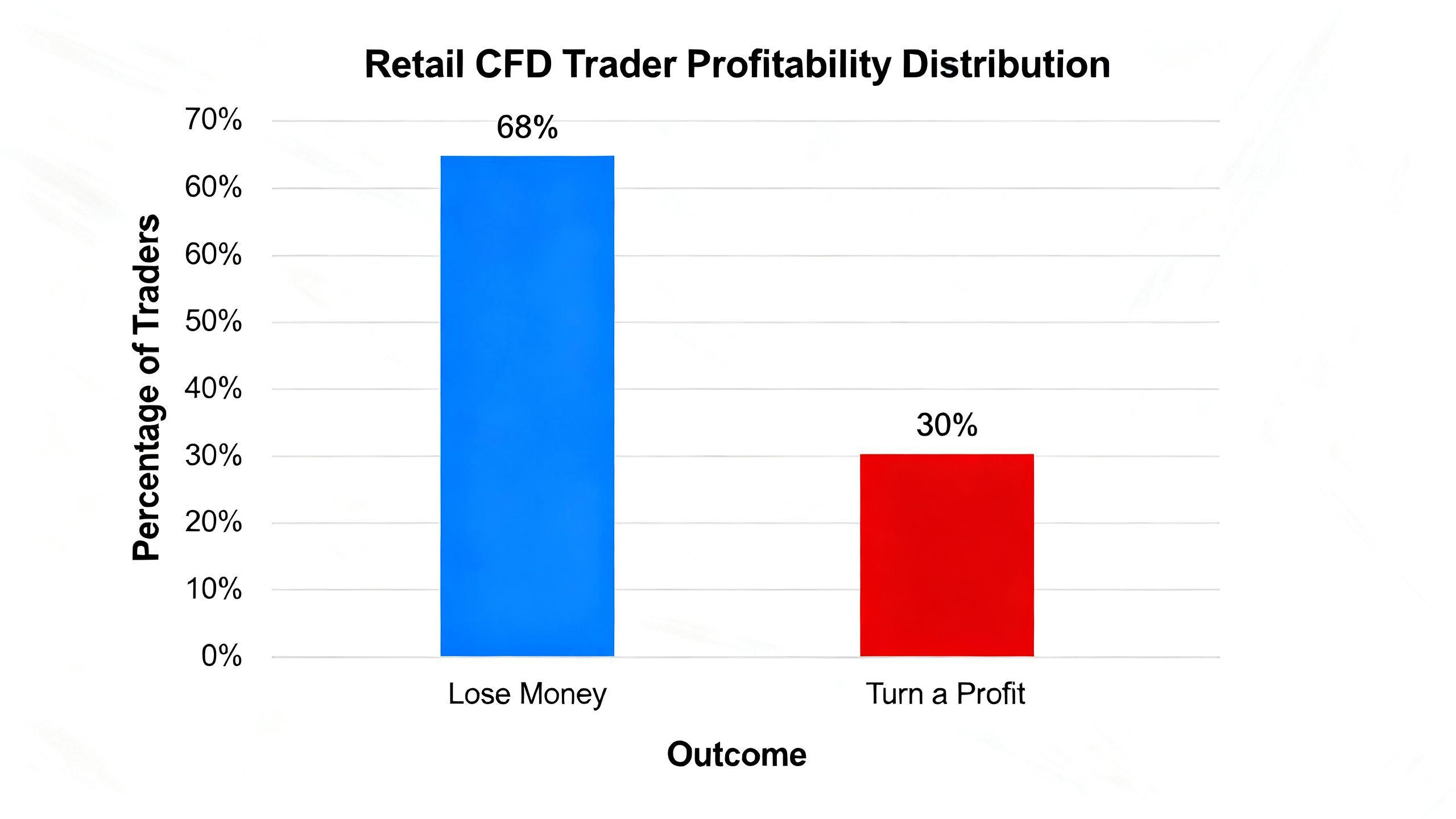
In the 2023–24 financial year, 68% of Australian retail clients lost money trading Contracts for Difference (CFDs), with total net losses exceeding $458 million. As part of a massive sector-wide integrity initiative, the Australian Securities and Investments Commission (ASIC) scrutinized 52 CFD issuers from October 2024 to December 2025 to determine if retail distribution practices were meeting necessary compliance standards.
What we found
- Retail clients lost a staggering $458 million trading CFDs in FY 24, a figure that includes $73 million paid in fees to issuers.
- Trading options CFDs remains the highest risk category, with 85% of retail clients making a net loss.
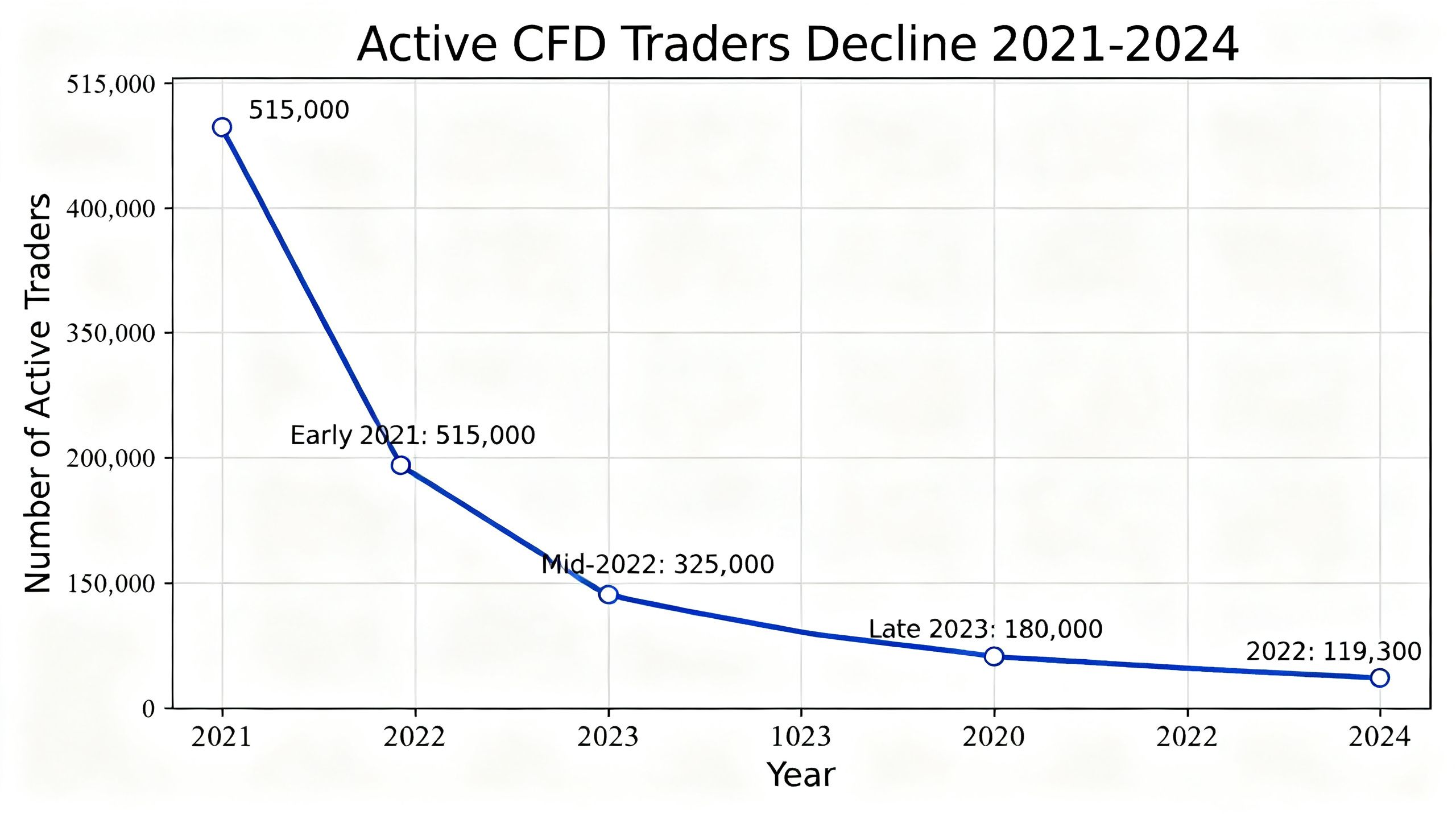
- The sector has shrunk significantly, with active clients per quarter dropping 76% since the introduction of ASIC’s product intervention order in 2021.
- 39 CFD issuers were forced to rewrite their Target Market Determinations (TMDs) because their initial client screening processes were fundamentally flawed.
- Over 70 million erroneous reports were identified during the review of OTC derivative transaction data, signaling widespread failures in regulatory oversight.
Why this matters
For the retail investor, the ASIC review is a harsh reminder that the environment in which you trade is as important as the trade itself. The data clearly shows that excessive leverage and high fee structures are not just side effects of trading; they are structural components that often ensure client losses. When 68% of a market participant base loses money, it suggests that the products are being distributed into inappropriate target markets. If you are an active trader, the most significant change following this review is that brokers are now under strict pressure to implement better "knock-out" criteria during onboarding. This means that if a broker is compliant today, they should theoretically be filtering out clients who do not possess the financial standing or the technical experience to handle high-risk derivative products.
The detail behind the numbers
Beyond the headline-grabbing losses, the data reveals a deeper pattern regarding acquisition and retention. The sector is highly concentrated, with a small number of entities controlling the majority of client volume. Interestingly, the data suggests a correlation between the acquisition channel and success rates. New retail clients acquired via paid online advertising registered a 74% loss rate, which is higher than the sector average for existing client cohorts. This indicates that aggressive marketing may be drawing in retail clients who are less prepared for the complexities of CFD market volatility.
These patterns persist despite the fact that many issuers have now attempted to patch their compliance holes. For example, 48 issuers had to implement technical updates just to comply with basic OTC transaction reporting requirements. When you look at the sub-segments, those with more than 50 positions open per month—the heavy traders—recorded a 76% loss rate after fees, proving that the "more frequency equals more gain" myth is soundly contradicted by the math.
How this compares to what’s commonly believed
There is a prevailing belief that CFD brokers offer a "level playing field" where sophisticated tools and algorithmic access provide a neutral environment. ASIC’s findings dismantle this. The review identified that issuers were routinely neglecting ongoing monitoring, treating the account-opening process as the only point of responsibility. Conventional wisdom suggests that as long as a client is warned of the risk, the issuer has fulfilled their duty. The data suggests otherwise: unless providers actively monitor trading behaviors—such as identifying excessive loss-to-wealth ratios—they are failing their reasonable steps obligation. The regulatory gap between what the industry claimed as best practice and what they actually delivered was immense, as evidenced by the 46 issuers who were forced to overhaul website content that was either misleading or completely unbalanced regarding product risk.
What to do with this
If you are choosing a broker in the current Australian market, look for evidence of active compliance rather than passive marketing. A reputable broker should now be using automated triggers to identify distress, such as flagging clients who are rapidly depleting their margin or demonstrating vulnerability. Do not simply rely on the broker’s own claim that they offer "professional tools." Instead, look for evidence that they have a transparent TMD and that their onboarding process isn’t just a series of "yes/no" self-certification prompts. As the industry settles into this new era of oversight, ensure your broker is one of the entities that proactively updated its reporting practices rather than one mandated to do so. Our platform is committed to the highest standards of transparency and client-first distribution; explore our transparent, compliance-backed account options today.
Sources & Methodology
This analysis is based on data provided in Australia’s ASIC Report 828, titled "Risky Business: Driving Change in CFD Issuers’ Distribution Practices," released in January 2026. The report details a sector-wide review of 52 Australian Financial Services (AFS) licensees conducting CFD operations. Data encompasses the 2024–2025 review period and includes comprehensive client trading data from the 2023–24 financial year (FY 24), covering 195,386 retail client accounts and 11,960 wholesale client accounts.