So, you’re looking into hedging with CFDs in Australia, and honestly, it can seem a bit much at first. Think of it like having a backup plan for your investments. When you’re trading, especially with things that move around a lot, you might want a way to protect yourself if prices go the wrong way. That’s where CFDs come in. They let you make a bet on whether a price will go up or down without actually owning the thing. This article is all about breaking down how that works, especially for folks here in Australia.
Key Takeaways
- CFDs, or contracts for difference, let you bet on price movements without owning the actual asset, useful for hedging in Australia.
- CFD providers mainly make money from the spread between buying and selling prices, or sometimes a commission.
- To start, learn the ropes, maybe use a demo account, and then fund a real trading account.
- Hedging with CFDs involves opening a position that profits if your other investments lose money, like shorting a CFD if your shares drop.
- Remember CFDs are risky due to leverage, and regulations like ASIC’s rules in Australia, including leverage limits, are important to know.
Understanding Contracts For Difference In Australia

What Does CFD Mean?
So, what exactly is a Contract For Difference, or CFD? Think of it as an agreement between a buyer and a seller to exchange the difference in the price of an asset from the time the contract is made until it’s closed. It’s a way to speculate on price movements without actually owning the underlying asset. This means you can bet on whether the price of something, like a stock or an index, will go up or down. You’re essentially trading on the price fluctuations.
How Do CFD Providers Make Money?
CFD providers, also known as brokers, have a few ways they earn their keep. The most common method is through the spread. This is the difference between the buying price and the selling price of an asset. When you open a trade, you’re buying at the higher price and selling at the lower price, and that gap is where the provider makes money. Some providers might also charge a commission, especially on share CFDs, which is a small fee based on the value of your trade. It’s good to know these costs upfront before you start trading.
CFDs Versus Traditional Stocks
CFDs and traditional stocks are quite different, even though they often involve the same underlying assets. When you buy a traditional stock, you actually own a piece of the company. You might get voting rights and dividends. With CFDs, you don’t own anything. You’re just betting on the price movement. This difference is pretty significant. CFDs also come with leverage, which we’ll get into later, meaning you can control a larger position with less capital. This can amplify both your potential gains and your potential losses.
Here’s a quick look at some key differences:
- Ownership: Stocks mean ownership; CFDs do not.
- Trading: Stocks are typically bought and sold on exchanges. CFDs are traded over-the-counter with a provider.
- Dividends: Stockholders may receive dividends. CFD holders usually have adjustments made to their account to reflect dividends on the underlying asset.
- Leverage: CFDs are commonly traded with leverage; traditional stock trading often isn’t.
It’s important to remember that CFD trading is a bit like a double-edged sword. The leverage that makes it attractive can also lead to rapid losses if the market moves against you. Always be aware of the risks involved and never trade with money you can’t afford to lose.
Getting Started With Hedging With CFDs Australia Explained
So, you’re looking to get into hedging with Contracts For Difference (CFDs) here in Australia? It sounds a bit technical, but honestly, it’s more about understanding a few key steps. Think of it like preparing for a road trip – you wouldn’t just jump in the car and go, right? You’d plan your route, check the car, and pack. Hedging with CFDs is similar.
How To Get Started Trading CFDs
Getting your head around CFD trading is the first hurdle. You’ll need to pick a broker that suits you. Not all brokers are the same, so do a bit of digging. Once you’ve chosen one, you’ll need to open an account. This usually involves some paperwork and identity checks, which is pretty standard.
- Choose a reputable broker: Look for one regulated in Australia.
- Complete the application: Fill out the necessary forms.
- Verify your identity: Provide documents as requested.
After your account is set up, you’ll need to put some money in it. This is your trading capital. Remember, only use money you can afford to lose. It’s a bit like putting gas in the car – you need enough to get going, but you don’t want to drain your savings.
Practice With A Demo Account
This is a big one, seriously. Before you even think about using real money, you absolutely should get familiar with how things work using a demo account. Most brokers offer these, and they’re a lifesaver. You get virtual money to trade with, but you’re using real market data. It’s the perfect way to test out different strategies, like hedging, without any risk. You can make mistakes, learn from them, and get a feel for the platform. It’s like practicing parallel parking in an empty lot before you hit the busy streets. This is where you can really start to understand hedging in trading without the pressure.
Fund Your Trading Account
Once you feel comfortable after spending time on the demo account, it’s time to fund your live account. Again, be smart about this. Start with a smaller amount. You can always add more later if you’re doing well and feel confident. Think about your initial deposit as just enough to get you started on your journey. You don’t need to break the bank on day one. The goal is to gradually build your experience and your capital as you go. It’s about taking measured steps, not giant leaps. This is how you can begin your CFD trading journey.
Hedging with CFDs involves opening positions that aim to offset potential losses in other trades. While it can protect your portfolio, it’s important to remember that it can also limit your potential profits. It’s a balancing act, and understanding this trade-off is key before you start.
Core CFD Hedging Strategies For Australian Traders
How To Use CFDs For Hedging
Hedging with CFDs is basically about setting up a safety net for your existing trades. Think of it like having insurance for your investments. When you’re worried about a market move that could hurt your current position, you can use a CFD to take an opposing trade. This doesn’t mean you’ll make a ton of money on the hedge itself; its main job is to reduce the damage from the other side of your portfolio. It’s a way to manage risk, not necessarily to chase more profits, though sometimes that can happen too. The key is to protect potential gains and manage your exposure to loss by establishing safeguards such as stop-loss and take-profit orders. Hedging is a strategy employed by both CFD traders and investors to minimize portfolio risk. While it aims to reduce risk as much as possible, it may not entirely eliminate it.
Direct Hedging Strategy Explained
This is probably the most straightforward way to hedge. You take a position on an asset, and then you open another position on that exact same asset but in the opposite direction. For example, let’s say you bought a CFD for the ASX 200 index because you think it’s going up. But then, you hear some news that makes you nervous about a short-term dip. Instead of selling your original ASX 200 CFD, you could open a short position on the ASX 200 CFD. If the market does drop, the profit from your short position helps cancel out the loss from your original long position. It’s a way to ride out short-term bumps without closing your main trade.
Offsetting Losses With Short Positions
Using short positions is central to many hedging techniques. When you short a CFD, you’re betting that the price of the underlying asset will fall. This is super useful for hedging because if your main investment is losing value, a short position on a related asset (or even the same asset) can gain value, helping to balance things out. It’s like having a counterweight. For instance, if you hold a bunch of shares in a tech company and you’re worried about the whole tech sector taking a hit, you could short a tech ETF or even a specific competitor’s stock. If your shares drop, the short position might go up, softening the blow. This is a common way traders try to offset potential losses during choppy market conditions.
Here are a few ways this plays out:
- Same Asset, Opposite Direction: As mentioned, shorting the same asset you’re long on. This is direct hedging.
- Related Assets: Shorting an asset that tends to move in the opposite direction of your main holding. For example, if you’re long on stocks, you might short a safe-haven asset like gold or the US dollar if you anticipate a market downturn.
- Pairs Trading: This is a bit more advanced. You might go long on one stock and short on another stock in the same industry, expecting one to outperform the other. The goal is to profit from the difference in their performance, while the overall market direction has less impact.
When you’re hedging, remember that it’s not just about preventing losses. It’s also about giving yourself the breathing room to let your original trade play out if the market eventually moves in your favour. It’s a strategic move to manage uncertainty.
Key Considerations For CFD Hedging In Australia
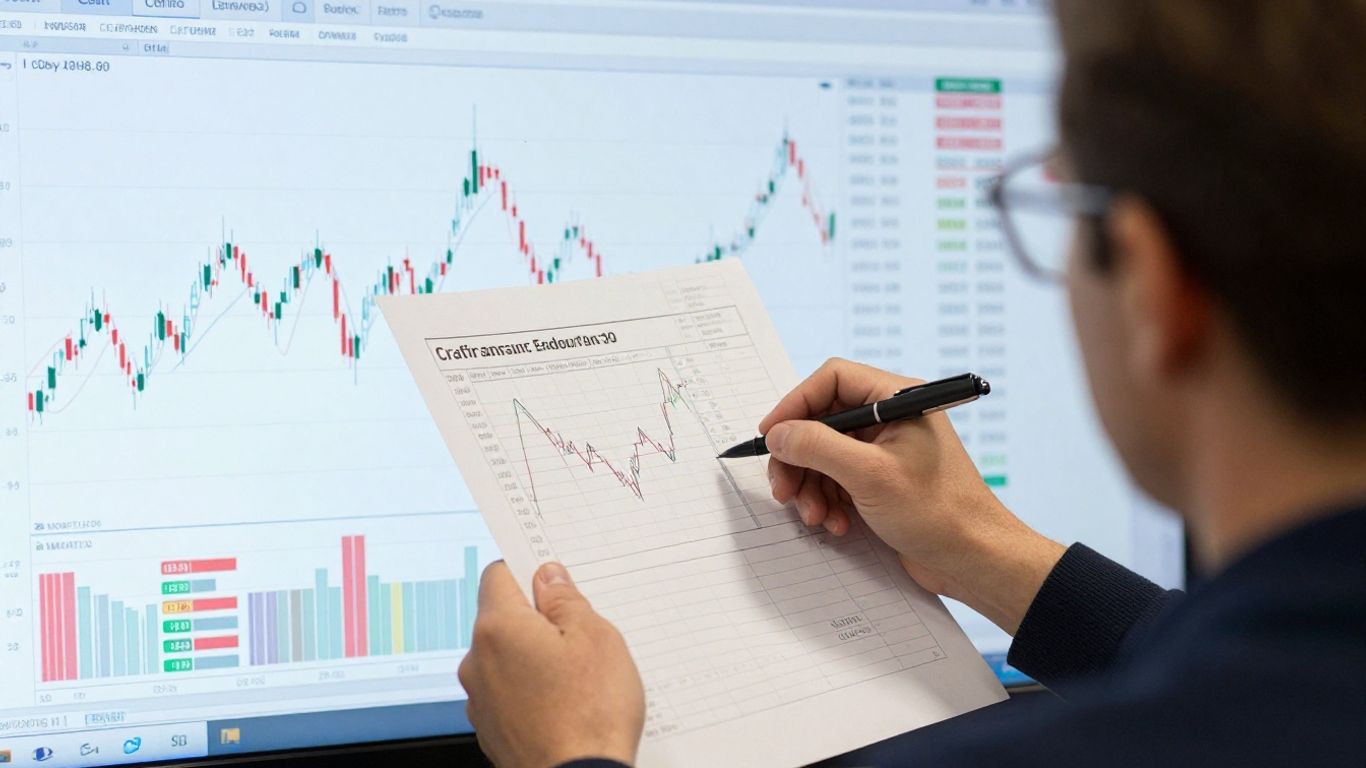
When you’re looking at using Contracts For Difference (CFDs) to hedge your investments here in Australia, there are a few things you really need to get your head around. It’s not just about opening a trade and hoping for the best. You’ve got to be smart about it.
Understanding Leverage And Margin
First off, let’s talk about leverage. This is a big one with CFDs. It means you can control a large position with a relatively small amount of your own money, called the margin. Think of it like borrowing money from your broker to make a bigger trade. On the one hand, this can really boost your profits if the market moves in your favour. But, and this is a huge ‘but’, it also means your losses can be magnified just as much. If the market goes against you, you could lose more than your initial deposit.
- Margin: The initial deposit required to open a leveraged position.
- Leverage Ratio: The ratio of the full position size to the margin required (e.g., 10:1 means for every $1 of margin, you control $10 of the asset).
- Magnified Outcomes: Both profits and losses are calculated on the full position size, not just the margin amount.
It’s super important to know that margin requirements can change depending on what you’re trading. Some popular indices might need a smaller margin percentage than individual shares, for instance. Always check the specific requirements for the asset you’re interested in. Trading CFDs involves significant risks, primarily leverage risk and market risk. Leverage can magnify both profits and losses, while market risk stems from the inherent volatility and unpredictability of the underlying assets’ prices. Understanding these risks is crucial before engaging in CFD trading.
Market Volatility And Risk Management
Markets can be wild, right? One minute things are calm, the next they’re all over the place. This volatility is something you absolutely have to factor in when you’re hedging. Your hedging strategy needs to be flexible enough to handle these swings. This is where risk management tools come into play. Using things like stop-loss orders is pretty standard. These automatically close your position if the price moves against you by a certain amount, helping to limit how much you can lose. Take-profit orders do the opposite – they lock in profits when a target price is reached.
Effective CFD hedging involves disciplined risk management at the strategy level, utilizing tools like stop-loss orders. Regulation alone does not eliminate risk, making strategic application of these tools crucial for managing portfolio exposure.
Monitoring Market Conditions
You can’t just set up a hedge and forget about it. You’ve got to keep an eye on what’s happening in the markets. This means staying updated on news that could affect your investments. Think economic reports, political events, or even industry-specific news. These things can cause prices to move unexpectedly. If you see a major development, you might need to adjust your hedging strategy. Maybe you need to increase the size of your hedge, move your stop-loss levels, or even close out a position entirely. It’s about being proactive and reacting to the information as it comes in. Effective CFD hedging involves disciplined risk management at the strategy level, utilizing tools like stop-loss orders.
Instruments Available For CFD Trading In Australia
When you’re looking at hedging with Contracts For Difference (CFDs) in Australia, you’ll find a pretty wide array of markets you can trade. It’s not just about stocks; CFDs open doors to many different types of financial instruments. This variety means you can often find a CFD that matches the asset you’re trying to hedge against, or one that moves in a predictable way related to your existing position.
Trading Forex and Indices with CFDs
Forex, or foreign exchange, is a massive market where currencies are traded. With CFDs, you can speculate on the price movements of currency pairs like the EUR/USD or AUD/USD without actually owning the currencies themselves. This is super handy for hedging if you have international business dealings or investments that could be affected by currency fluctuations. Similarly, major global indices, such as the ASX 200 or the FTSE 100, are available for CFD trading. Hedging an index CFD can be a way to protect a diversified portfolio of stocks that mirrors that index.
- Forex Pairs: Trade major, minor, and exotic currency pairs.
- Global Indices: Speculate on the performance of stock market indices from around the world.
- Overnight Funding: Be aware that holding forex and index CFDs overnight usually incurs a funding charge.
Commodity and Share CFDs
Commodities are another big area. Think of things like gold, oil, and agricultural products. Trading commodity CFDs lets you take a position on the price of these physical assets. If you’re invested in a company that relies heavily on, say, oil prices, you might use an oil CFD to hedge against a drop in those prices. Share CFDs allow you to trade on the price movements of individual company stocks, both Australian and international. This is a common way to hedge a specific stock holding or a portfolio of shares. Keep in mind that trading share CFDs often involves a commission charge on top of the spread, which is different from how forex or indices are typically priced. FOREX.com Australia provides access to a broad range of these markets.
Cryptocurrency CFDs
Cryptocurrencies have become a popular asset class, and you can trade them as CFDs too. This includes major coins like Bitcoin and Ethereum. Like other CFDs, you’re trading on the price difference without owning the actual digital coin. This can be a way to hedge against the volatility of a cryptocurrency investment or to gain exposure to the crypto market without the complexities of direct ownership. It’s important to remember that crypto markets can be extremely volatile, so careful risk management is key.
When considering which instruments to use for hedging, think about how closely their price movements correlate with the asset you want to protect. A strong correlation means your hedge is more likely to be effective. It’s also worth noting that CFDs are leveraged products, meaning both potential profits and losses can be magnified.
Understanding the costs associated with each instrument is also pretty important. While many CFDs are priced using spreads, share CFDs often come with an additional commission. Also, holding positions open overnight typically results in funding charges, which can add up over time. Always check the specific cost structure for the instrument you’re interested in. CFDs represent a contract for difference in value.
Navigating CFD Regulations In Australia
When you’re trading Contracts For Difference (CFDs) in Australia, it’s super important to know that the Australian Securities and Investments Commission (ASIC) is the main watchdog. They’ve put some pretty strict rules in place to keep retail traders, like you and me, from taking on too much risk. It’s not just about making money; it’s about doing it in a way that’s fair and doesn’t leave you exposed to losses you can’t handle.
ASIC’s Role In CFD Regulation
ASIC is all about making sure the CFD market is on the up and up. They keep a close eye on how CFD providers operate and have implemented specific measures to protect investors. This includes making sure brokers are upfront about the risks involved. For instance, they require brokers to tell you the percentage of their retail clients who actually lose money trading CFDs. It’s a bit of a reality check, you know? ASIC’s goal is to promote transparency and responsible trading practices. They’ve also been known to step in and secure refunds for investors when things haven’t gone according to plan, which shows they’re serious about accountability. You can find more details on their actions and upcoming consultations regarding CFD regulations on the ASIC website.
Leverage Restrictions For Retail Traders
One of the biggest things ASIC has done is put limits on how much leverage you can use. Leverage is what allows you to control a large position with a smaller amount of money, but it also magnifies both your potential profits and your losses. ASIC has capped the maximum leverage available for different types of assets. For example, you might see limits like 30:1 for major forex pairs, but it can be even lower for more volatile assets like commodities or individual shares. This is a big deal because it directly impacts how much risk you can take on with a given amount of capital.
Negative Balance Protection
Another key protection ASIC mandates is negative balance protection. This means that, as a retail trader, you can never lose more money than you have in your trading account. If a trade goes south and your losses exceed your deposit, the broker is required to cover the difference. This stops you from owing the broker money, which is a pretty significant safety net. It’s one of those rules that really helps to level the playing field and prevent catastrophic financial outcomes for everyday traders.
Understanding these regulations isn’t just about following the rules; it’s about trading smarter. Knowing the limits on leverage and the safety nets like negative balance protection helps you manage your risk more effectively and trade with more confidence. It’s always a good idea to check in with your broker about their specific policies and how they align with ASIC’s requirements. For CFD providers, staying compliant is an ongoing process, and they need to be aware of ASIC’s guidance to operate smoothly.
Wrapping It Up
So, we’ve gone over what CFDs are and how they can be used, especially for hedging in Australia. Remember, CFDs let you bet on prices going up or down without actually owning the thing you’re trading. This can be handy for protecting your existing investments, like shares, from sudden market dips. But, and this is a big but, CFDs are risky. They use leverage, which means you can make money faster, but you can also lose money faster, sometimes more than you put in. It’s super important to really get the risks involved and maybe even practice with a demo account before you put real money on the line. Don’t jump in without knowing what you’re doing, okay?
Frequently Asked Questions
What exactly is a CFD?
A CFD, or ‘contract for difference,’ is a way to bet on whether the price of something, like a stock or currency, will go up or down. You’re not actually buying the real thing, just agreeing to exchange the difference in price between when you start and when you finish your trade. It’s like making a prediction about the market’s future moves.
How do CFD companies make money?
CFD providers usually make money from the ‘spread.’ Think of it like this: they have a price for buying and a slightly different price for selling. You’ll usually buy a little higher than the going market price and sell a little lower. This small difference on each trade is how they earn their income. Some also charge a small commission, especially for share CFDs.
Can I use CFDs to protect my other investments?
Yes, that’s called hedging! You can use CFDs to try and balance out any money you might lose on another investment. For example, if you own shares that you think might drop in value, you could open a CFD ‘short’ position on those same shares. If the price does fall, the profit you make on the CFD could help cover the loss on your actual shares.
Is trading CFDs risky?
Absolutely. CFDs are considered high-risk because they use something called ‘leverage.’ Leverage lets you trade with more money than you actually have in your account, which can make your profits bigger, but it also makes your losses much bigger. It’s possible to lose more money than you initially put in, so it’s super important to be careful and only trade with money you can afford to lose.
What kinds of things can I trade with CFDs in Australia?
You can trade a lot of different things! This includes major currencies (like the Australian dollar against the US dollar), big stock market indexes (like the ASX 200), commodities like gold and oil, shares of many companies, and even cryptocurrencies like Bitcoin. It’s a wide world of markets you can explore.
What is ASIC and why does it matter for CFD trading in Australia?
ASIC is the Australian government’s watchdog for financial markets. They make rules to help protect people like you who trade CFDs. For instance, they limit how much leverage brokers can offer to regular traders and have rules about things like negative balance protection, which means you generally can’t lose more money than you have in your account.