The advice sounds prudent: risk only 1–2% of your account on every trade. But applied mechanically to a $2,000–$5,000 account, it can turn sensible risk management into a financial and psychological dead end. For many small retail traders, the better question is not “What percentage is considered professional?” It is “What risk amount makes the strategy viable after real-world trading costs?”
What everyone believes
The conventional view is simple. Risk 1% per trade if you are cautious; risk 2% if you are more aggressive. Calculate the distance to your stop loss, size the position accordingly, and never exceed the limit. A losing streak should be survivable, and the account should remain in the game long enough for the trading edge to play out.
That logic is sound in prop firms and institutional environments. It is also a useful starting point for many traders. A fixed percentage automatically reduces position size after losses, limits the damage from a bad run, and prevents one impulsive trade from destroying an account.
The problem is treating the starting point as a universal law.
Why that’s wrong
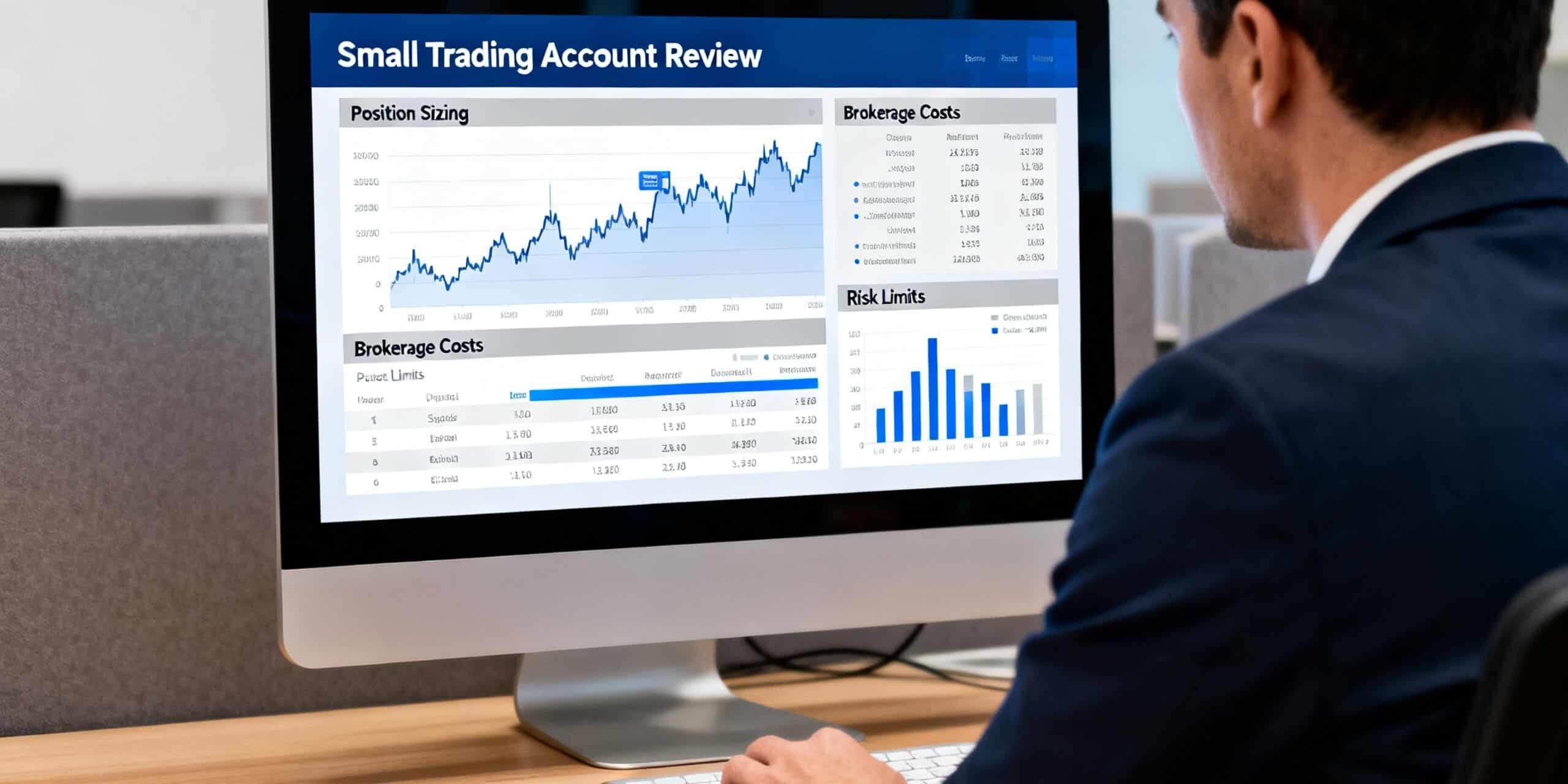
On a $2,000 account, 1% risk is $20. At 2%, it is $40. On a $5,000 account, the numbers are $50 and $100. Those amounts may look disciplined on a spreadsheet, but the spreadsheet usually leaves out the friction that small accounts face every time they trade.
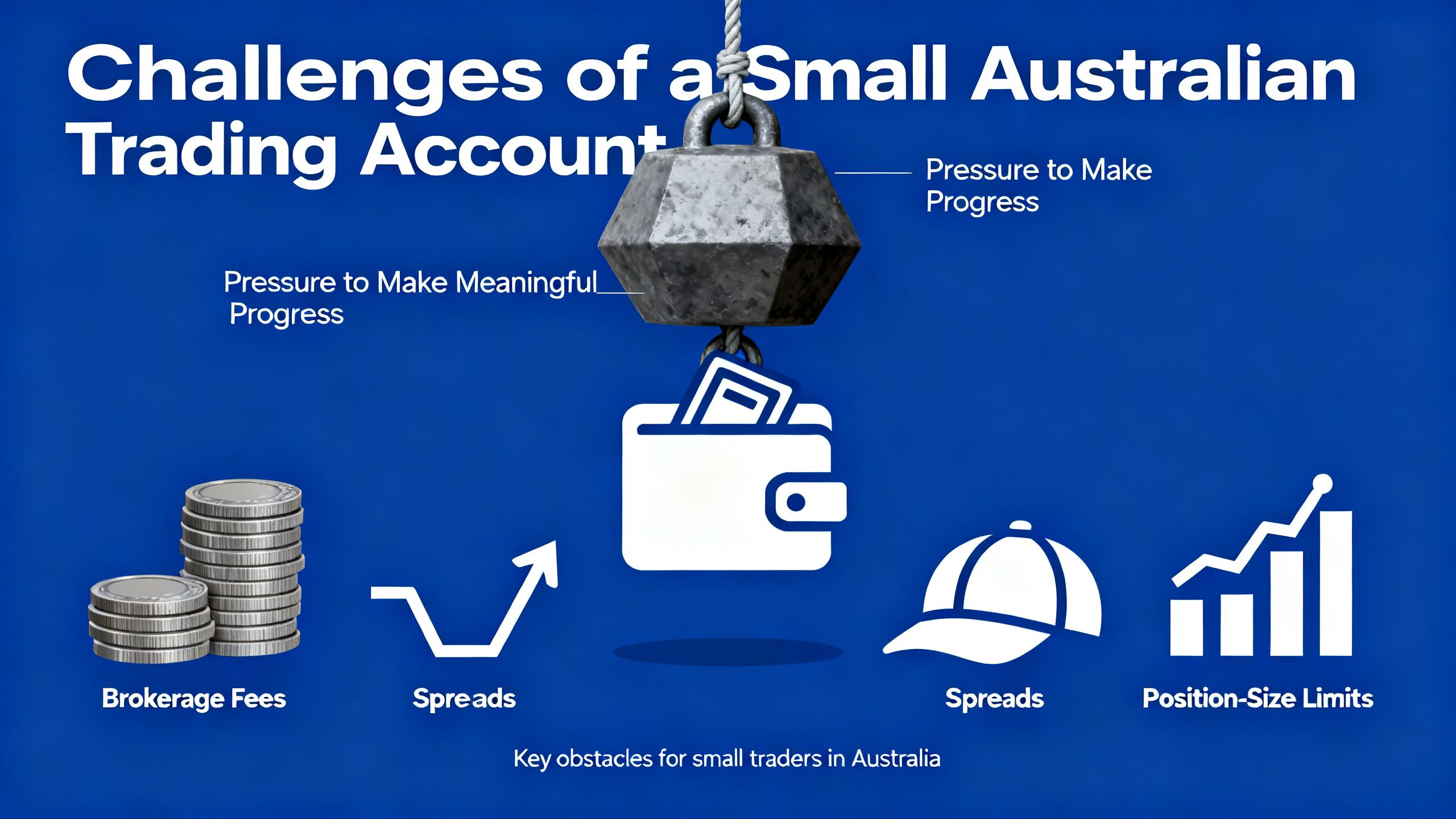
Brokerage, bid-ask spread, slippage and currency conversion costs all take a larger practical bite when the position is small. A trade that risks $20 may incur a few dollars of round-trip costs before the market has even moved. That is not automatically fatal, but it changes the economics of the setup. The stop is not the only amount at risk. The trader is also paying to express the idea.
Position-size constraints make the problem worse. Suppose a trader has a $3,000 account and wants to risk 1%, or $30, on a trade with a $0.30 stop. The formula suggests 100 shares. If the broker, market and product allow that position, fine. But a different setup with a $1.20 stop produces only 25 shares. A wider stop may be technically appropriate, yet the resulting position can become so small that the expected dollar return is negligible after costs.
That is where the “just follow the rule” advice breaks down. The trader is told to accept tiny outcomes indefinitely, while being shown other traders posting large percentage gains. Eventually, many people respond in one of two ways: they overtrade, or they quietly increase risk until the results feel meaningful.
Neither response is a character flaw. It is a predictable consequence of applying a large-account convention to a small-account problem.
Consider a strategy with a 45% win rate and an average winner twice the size of the average loser. That can be a viable edge before costs. But if the account risks only $20 per trade and the trader takes a dozen valid setups in a month, the gross result may still be modest. A handful of losses, plus trading costs, can erase much of the progress from the winners.
The answer is not to ignore risk. It is to recognise that risk percentage, account size and trading frequency must be considered together.
The strongest objection is worth taking seriously: increasing the percentage risk on a small account increases the chance of ruin. That is true. A 5% risk per trade is not magically responsible because 1% feels too small. Five consecutive losses reduce an account by roughly 23% under fixed-fractional sizing. Ten losses reduce it by roughly 40%. Those are not abstract dangers; they are normal enough sequences that every trader should model them.
But that objection does not prove that 1–2% is always the right answer. It proves that the trader needs a risk budget, a drawdown limit and a realistic understanding of the strategy’s losing streaks. “Never exceed 2%” is a shortcut. It is not a complete risk-management system.
What I’ve seen instead
The practical difference appears when you compare the rule on paper with the account in front of you.
A $2,000 trader risking 1% has a $20 initial loss limit. After ten consecutive losses, the account falls to about $1,809. That is a painful drawdown, but the trader may have spent weeks taking trades whose dollar outcomes were too small to maintain confidence. If the trader then breaks the rule and risks $100 on a “perfect” setup, the earlier discipline has not protected the account. It has merely delayed the inevitable emotional decision.
A more useful process starts with the strategy. If the system’s historical worst losing streak is eight trades, the trader can model what different risk levels would do across eight, 12 or 15 losses. Then factor in realistic costs and ask whether the expected return justifies the effort, attention and temptation to interfere.
For a small Australian account, that may lead to a risk level above 1–2% on selected trades—but only within a hard maximum drawdown and only when the position can be sized cleanly. It may also lead to the opposite conclusion: trade less frequently, use a lower-cost instrument, save more capital, or practise the strategy without pretending a tiny live account can produce a meaningful income.
The important point is that the percentage should serve the plan. The plan should not exist to satisfy a slogan.
What this means for you
Start by separating three numbers:
- Planned trade risk: the amount lost if the stop is hit.
- Total trading friction: brokerage, spread, slippage and any conversion costs.
- Maximum acceptable drawdown: the account loss at which you reduce size or stop trading.
Then test the strategy using actual dollar outcomes, not just percentages. Include losing streaks, missed fills and costs. If a $20 risk produces results so small that you are likely to interfere, acknowledge that honestly. The solution might be more capital, fewer trades, a different product or a different account objective.
Never increase risk simply because the account feels boring. Increase it only if your historical data, drawdown tolerance and execution costs support the decision. If you do use a higher percentage, apply it deliberately rather than emotionally: set a maximum account drawdown, reduce risk after a poor run, and define the conditions that force you to stop.
Also distinguish between “risk per trade” and “risk at once.” Three correlated positions can create far more exposure than their individual 1% labels suggest. A trader holding three highly related Australian mining stocks is not truly diversified because each trade is within the limit. The combined portfolio may be making one large macro or sector bet.
Finally, measure progress in process quality before account growth. A small account is not a miniature fund. It may be a learning account, an execution account or a test of whether the strategy survives live conditions. Giving it an unrealistic growth mandate is how traders turn risk management into gambling with extra steps.
The bottom line
The 1–2% rule is a useful default, not a universal truth. For prop firms and institutions, it may fit the capital base and operating model. For small Australian retail accounts, it can produce positions and outcomes so small that costs and frustration push traders toward worse decisions.
Use the percentage that your tested edge, actual costs and drawdown plan can support—not the percentage that sounds most professional. Risk management is not about repeating the right number. It is about building a system you can follow when the numbers stop feeling comfortable.