A detailed trading journal sounds like a mark of seriousness. For most retail CFD traders, it’s more likely to teach you to trust noise.
The problem isn’t recording what happened. It’s treating a handful of trades as evidence that Tuesdays, red candles, or a particular mood predict what happens next. A journal can help you follow a sound process. But when you mine small samples for secret patterns, it stops being a tool for discipline and starts manufacturing superstition.
What everyone believes
The case for journaling is persuasive: record every trade, note the setup, the time, your emotions, the market conditions, and the outcome. Review the entries regularly. The more detail you capture, the more clearly you’ll see what works and what doesn’t.
That advice has a reasonable core. A trader who never reviews decisions can repeat the same avoidable mistakes. If you keep moving your stop, ignoring your plan, or entering trades out of boredom, a record can make the behavior harder to deny.
But “record your process” and “find predictive patterns in your trades” are not the same instruction. Retail traders are often encouraged to do both as if more detail automatically leads to better conclusions. It doesn’t.
Why that’s wrong
Most retail traders don’t generate enough comparable trades to support the conclusions they want to draw. Their strategies change, market conditions shift, and the trades they take are not independent little experiments. A sample of a few dozen trades can feel substantial when each one was stressful and memorable. It is still a small sample for discovering whether a tiny slice of the data predicts an edge.
The trap is easy to demonstrate. Imagine a trader reviews 30 trades and notices that 8 of 10 Tuesday trades were winners. “I do better on Tuesdays,” the journal seems to say. But the trader has also looked at time of day, instrument, candle color, day of the week, setup type, news conditions, and perhaps a dozen other details. When you inspect enough categories, some will look unusually successful by chance alone. The apparent Tuesday advantage may be nothing more than a lucky cluster—and the next ten Tuesdays can erase it.
Now the trader changes behavior. They take more Tuesday trades, avoid trades on other days, or feel unusually confident when Tuesday arrives. A weak observation has become a real influence on decisions. The journal didn’t merely fail to reveal an edge; it helped create a new source of risk.

The same thing happens with labels like “red candles work for me” or “I trade badly after lunch.” They sound concrete, which makes them feel scientific. But a label is not evidence. Were the trades truly comparable? Was the rule defined before the outcomes were known? How many other patterns were checked and discarded? Would the apparent effect survive another batch of trades?
This is a version of a familiar statistical problem: the more patterns you search for, the more likely you are to find one that looks convincing by accident. And market results are noisy. A good decision can lose; a bad decision can win. If you judge the quality of a decision mainly by its immediate result, your journal can reward luck and punish discipline.
What I’ve seen instead
The useful distinction is between recording facts that help you evaluate your process and collecting details in the hope that one will explain the market.
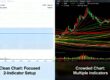
Consider two entries. One says: “Lost on EUR/USD. Felt bad. Red candle.” The other records the planned entry, stop and target; whether the trade met a predefined setup; whether the position size followed the plan; and whether the exit followed the rules. The second entry makes it possible to inspect execution. It does not pretend that a candle color or weekday has predictive power simply because a few trades happened to line up.
Here’s a simple hypothetical. A trader takes 20 trades that fit their stated setup. They follow the plan on 15 and break it on 5. The five rule-breaking trades lose money. That result is worth investigating—not because it proves that every rule-breaking trade will lose, but because the trader can verify the behavior and decide to address it. By contrast, “my best trades happen before noon” is not actionable evidence if it emerged after scanning a tiny, mixed batch of trades and has no clear explanation or confirmation.
A journal is strongest as an accountability device. It can show whether you followed the rules you had already chosen. It is weakest when asked to invent rules after the fact. That distinction is less glamorous than discovering your personal winning weekday, but it protects you from confusing a memorable coincidence with a repeatable edge.
What this means for you
Keep a journal, but make it smaller and stricter. Before a trade, record the setup and the conditions that would make it valid. Afterward, record whether you followed your plan—not just whether you won. Track a few fields that directly relate to execution, such as position sizing, stop placement, and whether you entered according to your rules.
Then set limits on what you’re willing to conclude. Don’t promote a pattern into a trading rule because it appeared in a handful of trades. Define the pattern before testing it, count how many alternatives you’ve considered, and look for evidence in a separate set of trades rather than the same entries that inspired the idea. If you don’t have enough observations to tell a real effect from chance, the honest conclusion is “I don’t know yet.”
Most importantly, separate decision quality from trade outcome. Review whether the trade was valid under your plan. A profitable deviation is still a deviation; a losing trade taken correctly is not automatically a mistake. This is not a promise that better records will make a strategy profitable. It is a way to avoid letting random outcomes quietly rewrite your rules.
The bottom line
A trading journal is not a pattern detector, and more detail does not turn a small sample into reliable evidence. Use it to audit your behavior—not to discover that Tuesday, red candles, or some other coincidence owes you an edge. The disciplined move is not to log everything; it’s to record what matters, follow a predefined process, and refuse to treat noise as a signal.