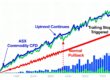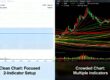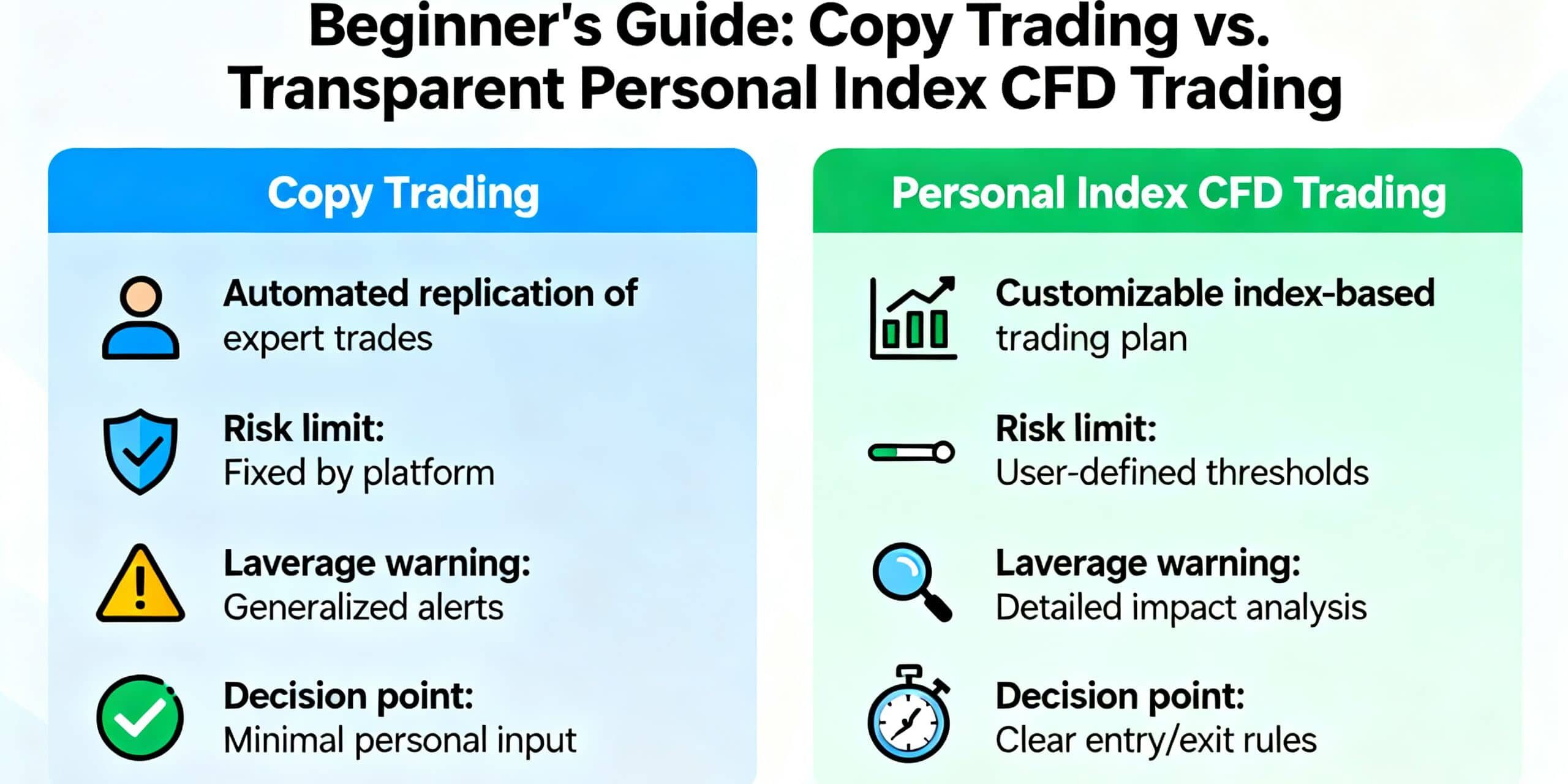
Copy trading is marketed as the safe on-ramp to markets. For most beginners, it is the opposite: a way to outsource judgment before they have learned how to build it.
If you are new to trading, you are usually better served by learning to manage a small, transparent position in a broad index CFD yourself than by blindly mirroring somebody else’s decisions. That does not make CFDs safe—leverage can magnify losses quickly. It does make the risk visible, explainable, and educational. Copy trading often hides all three.
What everyone believes
The consensus is easy to understand. Beginners make bad decisions because they lack experience. Experienced traders have better analysis, stronger discipline, and more refined risk management. So why not let beginners copy them?
The pitch sounds sensible: no need to study charts, follow economic calendars, or decide when to enter and exit. Find a trader with a strong track record, allocate some money, and let the platform reproduce the trades automatically.
In theory, this removes the beginner’s biggest weakness—decision-making. In practice, it removes the learning loop entirely.
The copier sees a position appear, but not the full reasoning behind it. They may not know whether the trader is hedging, testing a thesis, trading around a news event, or simply accepting a temporary loss as part of a larger plan. A neat percentage return on a profile page conceals the process that produced it.
That is not safety. It is dependency with a user-friendly interface.
Why that’s wrong
A beginner does not primarily need someone else to make decisions. A beginner needs repeated, low-stakes exposure to the consequences of making decisions.
That is how judgment develops. You form a view, define what would prove it wrong, choose a position size, watch the market move, and review the result. Sometimes you are right for the wrong reason. Sometimes you are wrong despite following a sound process. Both outcomes teach you something.
Copy trading skips the most valuable part. The copier receives the outcome without owning the reasoning.
Imagine a copied trader opens a long position on a major index. The beginner sees the position move against them for three days. They do not know that the trader expected a short-term pullback, has a defined stop, and sized the trade small enough to tolerate it. All the beginner sees is red. Fear takes over, and they copy out at a loss.
The original trader may recover because the position was part of a deliberate plan. The copier has already abandoned it because they never had a plan of their own.
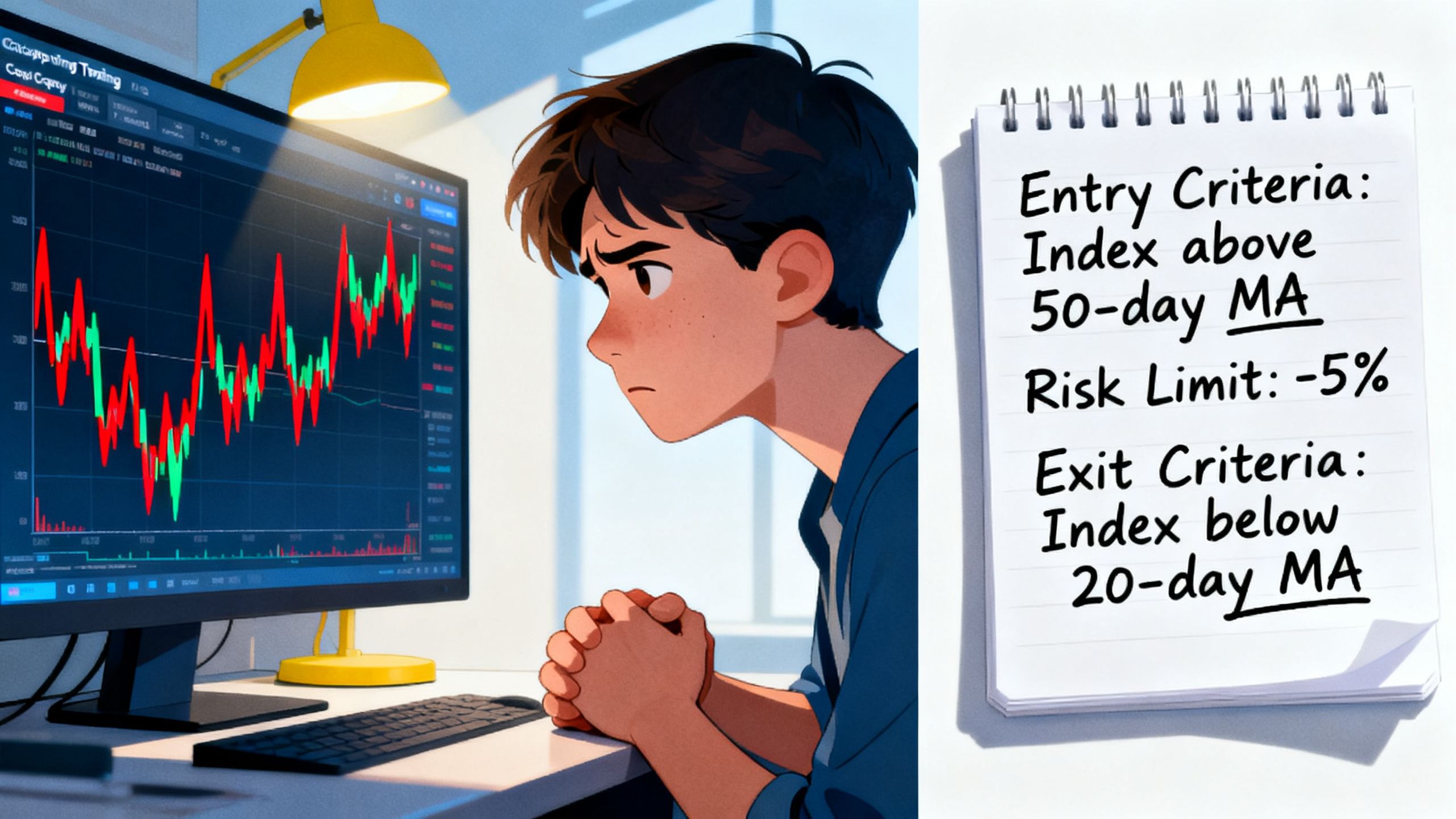
The reverse happens during winning trades. A copied position rises sharply, and the beginner assumes the trader possesses a reliable gift. They increase their allocation. The next trade loses. The next one loses more. The beginner discovers too late that a track record is not a guarantee, and that even a skilled trader’s strategy can experience drawdowns.
This is the central flaw in the “safer beginner entry point” argument: copying can reduce the number of decisions while increasing the number of things the beginner does not understand.
The strongest argument for copy trading is that it protects people from emotional mistakes. That argument deserves to be taken seriously. A disciplined professional may indeed make better entries and exits than someone who has never traded before. Automation can also prevent impulsive manual interference.
But the benefit only holds if the copier understands the risks, accepts the strategy’s drawdowns, uses sensible allocation, and stays invested through periods of uncertainty. Those are not platform features. They are judgment skills. And if the copier already has those skills, they are no longer relying on copy trading in the way its marketing suggests.
There is another problem: the beginner often mistakes visible performance for manageable risk. A trader who gained 40% may have used high leverage, concentrated exposure, or endured a 30% drawdown to get there. A profile showing returns rarely communicates the emotional experience of holding that position, the strategy’s failure conditions, or whether the result was mostly luck.
A broad index CFD traded directly is not automatically safer. CFDs are leveraged products, and losses can exceed expectations if leverage, margin, and stop levels are misunderstood. But a small, controlled position in a transparent market forces the beginner to confront the mechanics: what they own exposure to, how much they can lose, and why they entered. That clarity is more valuable than borrowed confidence.
What I’ve seen instead
The recurring pattern is not that beginners lack access to good traders. It is that they lack a framework for interpreting what happens next.
A copied trade opens after a strong run. The beginner feels reassured because the trader’s recent results look impressive. Then the market changes. Volatility increases, the copied trader adjusts positions, or a losing streak begins. The beginner has no independent thesis to consult and no personal rule for deciding whether the drawdown is normal or disastrous.
So they make the only decision that feels available: they stop copying.
That creates a particularly damaging cycle. They join after performance has attracted attention, exit during a period of weakness, and conclude that markets—or the platform—are rigged. The strategy may have been unsuitable, but the beginner has learned almost nothing about why.
Direct participation creates a different kind of feedback. Suppose someone takes a very small position on a broad index after writing down three things: the reason for entering, the maximum acceptable loss, and the condition that would invalidate the trade. If the position loses, the result is uncomfortable but useful. Was the analysis weak? Was the position too large? Did the trader ignore their own exit rule? Those questions build capability.
Even a profitable trade can expose a mistake. A beginner might make money while using too much leverage or entering without a clear stop. The result is still a warning. Copy trading can conceal that warning because the beginner attributes the success to the copied trader rather than examining their own risk.
The point is not that every beginner should become an active trader. Many people should not trade at all, and a diversified long-term investment approach may be more appropriate than either copy trading or CFDs. The point is narrower: for someone who has already decided to learn trading, outsourcing every meaningful decision is a poor educational strategy.
What this means for you
First, stop treating a trader’s historical return as a safety rating. Study the drawdown, leverage, concentration, holding period, and worst-case behavior. If you cannot explain how the strategy makes and loses money, you are not choosing a strategy. You are choosing a personality.
Second, separate learning from earning. Use a demo account or an amount so small that a loss does not alter your finances. The objective at the beginning is not to beat a copied trader. It is to understand your own reactions and build repeatable rules.
Third, if you trade an index CFD, remove as much hidden complexity as possible. Use a broad, liquid index, keep position size modest, understand the margin requirement, and know exactly how leverage affects both gains and losses. Never risk money needed for living expenses, and remember that stops do not eliminate every form of execution risk.
Fourth, write the trade down before placing it. Record the thesis, entry, invalidation point, position size, and exit plan. If you cannot state why you are entering and what would make you leave, copying someone else’s trade will not solve the problem—it will postpone it.
Finally, treat another trader’s ideas as research, not instructions. You can study how experienced traders think without surrendering responsibility for your own capital. That distinction is the difference between learning from a market participant and renting their conviction.
The bottom line
Copy trading is not safer for most beginners. It is often less educational, less transparent, and more psychologically fragile than taking a small, clearly defined position yourself. It replaces the painful process that builds judgment with the comforting illusion that judgment is no longer required.
If you want to trade, start with exposure you understand, risk you can afford, and decisions you can explain. Do not outsource the lesson and expect to keep the skill.