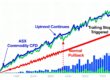
A stop-loss is not automatically good risk management. On volatile ASX-listed CFDs, a rigid stop placed at an arbitrary fixed distance can be little more than an instruction to sell into normal market noise. The result is not disciplined trading; it is a steady leak of small, avoidable losses.
What everyone believes
The conventional rule is simple: always use a stop-loss, place it as soon as you enter, and never move it farther away. The tighter and more mechanical the stop, the more disciplined the trader supposedly is.
There is a sensible idea underneath that rule. A trader must know where a position is invalidated. No one should hold a losing CFD indefinitely, hoping the market will eventually rescue the trade. Leverage makes uncontrolled losses especially dangerous, and a predefined exit can prevent one bad position from becoming a catastrophic one.
But “always use a stop-loss” has quietly become “any stop-loss is better than a thoughtfully designed one.” That is where the advice breaks down.
Why that’s wrong
A stop-loss only protects capital if it is placed beyond the market movement that would genuinely disprove the trade. If it sits inside ordinary price noise, it does not measure whether the thesis failed. It measures whether the market briefly moved against the position.
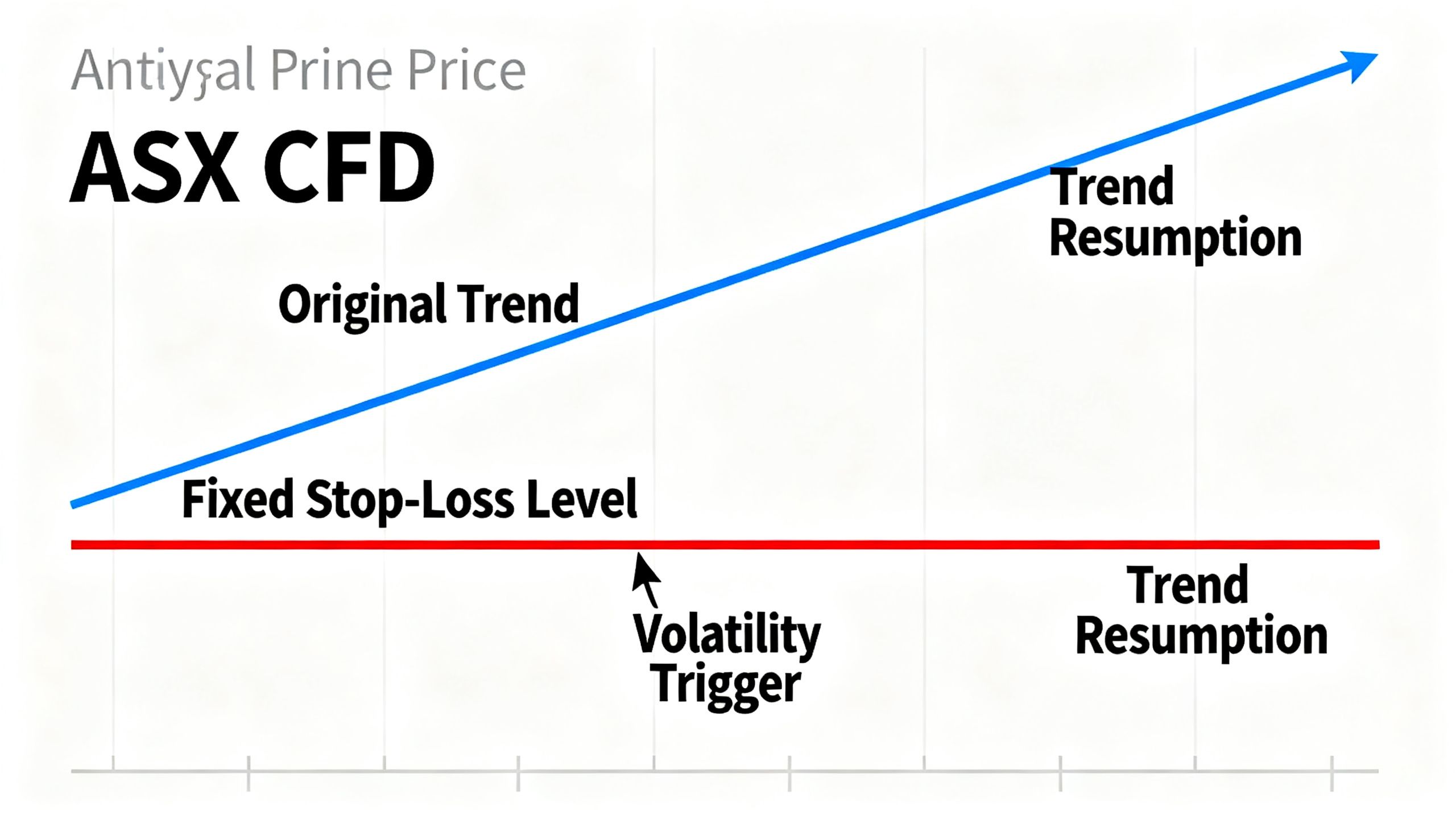
That distinction matters on volatile or thinly traded ASX CFDs. Prices can jump between available quotes. Spreads can widen. A short-lived liquidity gap can print a price that exists for a moment but does not represent a meaningful change in the underlying setup. A fixed stop can be triggered in that moment, and the trader is out before the market resumes the original direction.
Consider a trader who buys after a breakout and places a stop 1% below entry because that is the trader’s standard rule. If the instrument regularly moves 1.5% or 2% during ordinary intraday fluctuations, the stop is not conservative. It is positioned inside the instrument’s normal operating range. The trader has effectively chosen to exit before the trade has had room to work.
The loss may look small. That is precisely why the problem is easy to miss. A sequence of 0.8% or 1% losses feels manageable, especially when each one can be explained as “just part of trading.” But repeated stop-outs create friction: the spread, financing, commissions, slippage and the opportunity cost of being removed from a valid position. A trader can be directionally right and still lose because the risk-control rule was badly matched to the market.
The strongest objection is that widening a stop simply increases the potential loss. That objection is valid when widening is done emotionally, after the position has started losing, with no adjustment to position size. A wider stop without smaller exposure is not sophistication; it is reckless risk expansion.
But that is not the alternative. The alternative is to define the invalidation level first, account for current volatility and market structure, then size the position so the total dollar risk remains acceptable. A stop can be wider in price terms while the actual portfolio risk stays unchanged.
That is the part the fixed-stop gospel leaves out. Distance and risk are not the same thing.
What I’ve seen instead
The most revealing pattern appears in trade reviews. A trader records a loss, then checks what happened after the exit. Again and again, the position is stopped out near a recent intraday low, only for the price to recover and move toward the original target. The trade did not fail at the point where the stop was triggered. The stop failed to distinguish noise from invalidation.
The pattern is especially obvious when comparing instruments with different volatility profiles. A fixed 20-cent stop may be generous for one CFD and absurdly tight for another. Even on the same instrument, a stop that works during a quiet session can be useless when the market opens sharply, reacts to news or trades with a wider spread.
A useful review does not ask only, “Did the stop limit the loss?” It also asks:
- How far does this instrument normally move during the relevant timeframe?
- Was the stop beyond a meaningful support or resistance level?
- Did the price move through the stop decisively, or merely spike into it?
- Was the spread materially wider than usual?
- How many stopped-out trades later moved in the anticipated direction?
- Would a volatility-adjusted stop have preserved the same dollar risk with a smaller position?
Those questions often expose a uncomfortable truth: the trader has been optimising for a neat-looking percentage rather than a sound exit location.
This does not mean every stopped-out trade was avoidable. Some trades are simply wrong. A genuine break below support, a failed pattern or a material change in the underlying market should be treated seriously. The point is that a stop should be linked to that evidence—not to a universal number chosen because it feels disciplined.
A trade journal makes the difference visible. Mark the original entry, the fixed stop, a structurally meaningful invalidation level and the instrument’s recent average range. Over a meaningful sample, compare the outcomes. The exercise will not make every wider stop profitable, but it will show whether the current stop is regularly being hit by ordinary movement rather than thesis failure.
What this means for you
Start by abandoning the question, “How far should my stop be?” Ask instead, “What price action would prove this trade wrong?” Place the stop beyond that level, with enough room to account for the instrument’s current volatility and liquidity conditions.
Then work backwards to position size. If the wider stop means the loss per unit is larger, buy fewer units. Set a maximum monetary risk before entering and keep that risk fixed. Never widen the stop while holding the original position size simply to avoid taking a loss.
Use volatility as a measurement, not a permission slip. Recent ranges, average true range and nearby market structure can help identify whether a stop is sitting inside normal movement. They should not be used mechanically or treated as guarantees. Thin markets can behave unpredictably, and a stop order may execute at a worse price than expected during a fast move.
Also distinguish between the chart price and the price at which your CFD provider may trigger the order. Bid-ask spreads and platform-specific pricing matter. A level that looks safe on a chart can be vulnerable on the executable quote.
Finally, review your exits by category. Separate trades stopped during ordinary volatility from trades stopped after a genuine structural break. If the first category dominates, your stop placement or position sizing needs work. If the second dominates, the strategy itself may need work. Do not let the word “discipline” prevent you from finding out which problem you actually have.
The bottom line
A rigid, fixed stop-loss is not automatically disciplined. On volatile ASX-listed CFDs, it can convert normal noise and brief liquidity gaps into a reliable stream of small losses. Stops should sit where the trade thesis fails, not where a generic percentage says they belong.
Use a wider or volatility-adjusted stop when the market requires it, reduce position size to keep monetary risk controlled, and test the decision in your trade journal. The goal is not to avoid losses. It is to stop paying for exits that the market never actually justified.