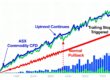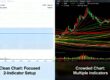
Most part-time CFD traders do not need more markets. They need fewer decisions, better observation, and enough attention left to manage the positions they already have.
That is why I believe spreading your CFD exposure across 10 or more instruments is usually a mistake for a time-poor retail trader. Concentrating on two or three markets you understand deeply is not automatically safe—but in short-term leveraged trading, it is often the more disciplined choice.
What everyone believes
The conventional advice sounds sensible: diversify.
Trade indices, currencies, commodities, shares and perhaps cryptocurrencies. If one market moves against you, another may move in your favour. Exposure is spread around, so the portfolio should be less vulnerable to any single event.
That logic is reasonable in long-term investing. An investor holding assets for years can benefit from owning a broad mix of markets. They are not expected to monitor every price movement, economic release or technical setup in real time.
CFD trading is different. CFDs are leveraged, short-term instruments. Your exposure can change quickly, costs can accumulate, and a position that looks manageable in isolation can become dangerous when the trader is not watching it properly.
The standard diversification advice is being applied to a different activity with different risks. That is the problem.
Why that’s wrong
Diversification reduces concentration risk only when you can manage the things you own. For a part-time trader checking markets before work, during a lunch break and perhaps again at night, owning ten or more instruments can create a different kind of concentration: concentrated attention risk.
Your capital may be spread across markets, but your time is not.
You still have one brain, one schedule and a limited number of opportunities to review charts, news, margin requirements and open positions. When ten instruments are competing for that attention, something gets missed. Perhaps a key support level breaks while you are watching another chart. Perhaps a central-bank announcement changes the currency market while you are focused on an index setup. Perhaps several supposedly different positions are all reacting to the same risk-off move.
That is not effective diversification. It is a larger number of moving parts being managed with the same limited attention.
The strongest argument for broad exposure is that different markets do not always move together. That is true. But “not always correlated” does not mean “independent when it matters.” During major economic events, markets often become more connected. Interest-rate expectations can move currencies, equity indices, bond yields and commodities at the same time. A trader may think they have five separate ideas when they really have one macroeconomic bet expressed five ways.
And even when the markets are genuinely different, monitoring requirements multiply. Every additional instrument brings its own rhythm, volatility, trading hours, liquidity conditions, catalysts and typical false signals. A setup that makes sense on the Australian 200 is not automatically transferable to gold or EUR/USD. Familiarity matters because execution depends on context.
This is where the imported investing advice breaks down. A long-term investor can diversify and wait. A short-term CFD trader has to decide when to enter, where the trade is invalidated, how much volatility is normal, and whether the market is behaving as expected. Those decisions become harder—not easier—when attention is scattered.

The opposing view deserves a fair hearing. Concentration can absolutely increase risk. If you put too much capital into one market, one unexpected announcement or one misread trend can cause serious damage. A trader who becomes overconfident in a familiar instrument may also mistake familiarity for an edge.
But that is an argument for sensible position sizing and hard risk limits. It is not an argument for adding seven more markets that you cannot properly follow.
The choice is not “concentration or no risk.” The real choice is whether you want to control a small number of known risks or create a larger collection of risks that you only occasionally inspect.
What I’ve seen instead
The most common failure in over-diversified retail trading is not that every position loses at once. It is that the trader gradually loses awareness of why the positions exist.
A trader sees a potential setup on an index, then notices a currency pair moving, then adds a commodity because it appears uncorrelated. A few days later, there are positions across eight or ten instruments. Each trade made sense at the moment of entry. The portfolio as a whole no longer has a clear thesis.
The trader is not managing a strategy anymore. They are managing a watchlist that happened to become an account.
That creates predictable behaviour. Positions are checked too infrequently. Stops are adjusted late. A trade that should have been closed remains open because the trader has not reviewed it properly. A new signal is taken simply because another chart is quiet. Risk is measured trade by trade, while the combined exposure is ignored.
By contrast, spending several weeks focused on two or three markets produces a different kind of knowledge. You begin to recognise how each market behaves around major announcements. You learn which breakouts tend to follow through and which are usually traps. You see how volatility changes across sessions. You become more familiar with the distance a normal pullback can travel before the original setup is genuinely invalidated.
That knowledge does not guarantee profitable trades. Nothing does. But it improves the quality of decisions because you are no longer treating every chart as a stranger.
There is also a practical advantage: a smaller universe makes review possible. You can replay trades, record what happened, compare outcomes and identify whether your process is working. Ten-plus instruments produce more data, but not necessarily more insight. Often they produce more noise and a better excuse for failing to learn from any individual trade.
This is especially important for Australian retail traders who are fitting trading around a job, family and other commitments. The constraint is not a lack of available markets. The constraint is attention. A strategy that requires constant surveillance is a poor fit for a schedule that cannot provide it.
What this means for you
Start by choosing two or three markets based on your actual availability, not on the size of the instrument list offered by your broker.
Choose markets whose active sessions you can realistically monitor. Learn their major drivers, normal volatility and common reactions to scheduled economic events. Keep a written reason for including each one. If you cannot explain what makes a market suitable for your strategy and schedule, it probably does not belong in your core universe.
Then define what “deep understanding” means in practice. It should include:
- The sessions and times when the market is most active.
- The economic announcements that can rapidly change its behaviour.
- The typical size of its moves and pullbacks.
- The conditions in which your setup performs poorly.
- The maximum amount you are willing to lose on a trade and across correlated positions.
Do not confuse concentration with oversized positions. Focusing on three markets does not justify betting more on each one. Keep position sizes conservative, use predetermined exits, and assess total exposure before entering another trade.
You can also use a simple rotation rule. If one of your chosen markets no longer suits your schedule or strategy, replace it after a deliberate review. Do not add new instruments impulsively because the current ones are quiet. Quiet markets are not a problem to solve; sometimes they are a reason to wait.
Most importantly, measure whether focus improves your process. Track execution quality, missed signals, rule violations and time spent monitoring—not just wins and losses. The point is to determine whether a smaller market universe helps you make better decisions with the time you actually have.
This is not personal financial advice, and CFDs are complex, leveraged products that can result in rapid losses. Any approach should be tested carefully and sized according to your circumstances.
The bottom line
For most part-time Australian retail traders, ten or more CFD instruments do not create meaningful diversification. They create more opportunities to miss information, misunderstand correlation and manage positions badly. Two or three markets studied deeply can offer a more realistic path to disciplined execution.
Stop collecting markets. Choose a small universe, learn it properly, control your position size and give your attention a chance to become an edge.