Here are the main points to remember if you’re thinking about iron ore CFD trading in Australia. Keep these in mind as you learn more about the market.
Key Takeaways
- Iron ore CFDs let you speculate on price changes without owning the actual ore.
- China’s demand for steel is a major factor influencing iron ore prices.
- Leverage can increase both potential profits and losses, so use it carefully.
- Choosing a regulated broker in Australia is important for safety.
- Always have a risk management plan in place before you start trading.
Understanding Iron Ore CFD Trading In Australia
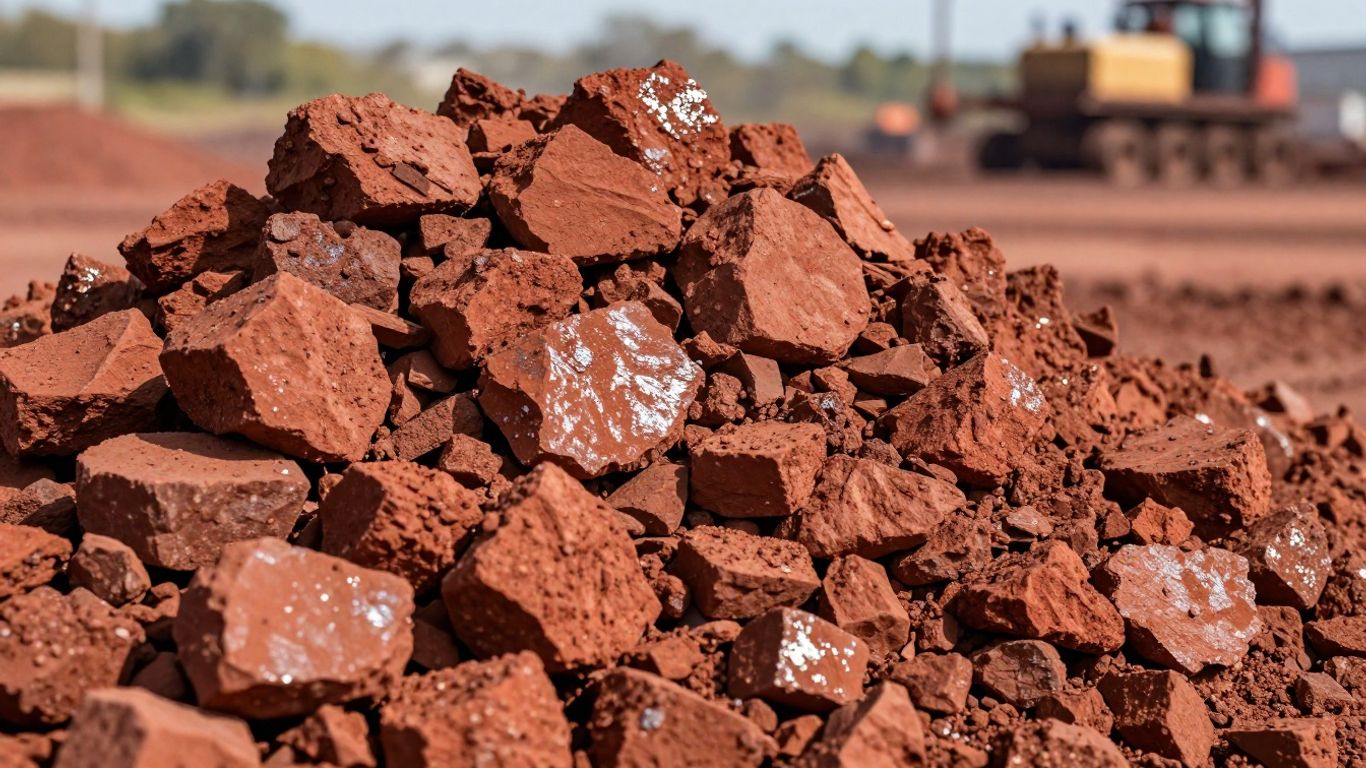
G’day! So, you’re keen to get a handle on trading iron ore using Contracts For Difference (CFDs) right here in Australia? It’s a bit of a niche market, but it can be pretty interesting if you’re looking to diversify your trading portfolio beyond just shares. Let’s break down what it all means.
What Are Contracts For Difference (CFDs)?
Basically, a CFD is a contract between you and a broker. You’re agreeing to exchange the difference in the price of an asset from the time the contract is opened until it’s closed. You don’t actually own the underlying asset, like iron ore itself. Instead, you’re speculating on whether its price will go up or down. It’s a way to get exposure to price movements without having to physically buy or store the commodity. This is a key difference from other ways to trade, like futures or physical commodities. CFDs are complex instruments and come with a high risk of losing money rapidly due to leverage. Between 52.00%-86.00% of retail investor accounts lose money when trading CFDs. You should consider whether you can afford to take the high risk of losing your money.
Why Consider Iron Ore CFD Trading?
There are a few reasons why Aussie traders might look at iron ore CFDs. For starters, it’s a major commodity, and its price can be influenced by global economic trends, particularly in China, which is a massive consumer. If you think you’ve got a good read on global demand for steel, which uses iron ore, then trading iron ore could be an option. It can also be a way to hedge against inflation or a weakening Australian dollar, as commodities are often priced in US dollars. Plus, it offers a different kind of trading experience compared to just buying shares in mining companies. You can find more info on trading commodities in 2026.
Key Considerations For Australian Traders
Before you jump in, there are a few things to keep in mind. Firstly, make sure you’re trading with a broker that’s regulated here in Australia. This gives you a layer of protection. Secondly, iron ore prices can be pretty volatile, influenced by everything from Chinese construction projects to global supply chain issues. So, understanding these market drivers is pretty important. You’ll also want to get your head around how leverage works with CFDs, as it can amplify both your potential profits and your losses. It’s not for the faint-hearted, that’s for sure.
Trading iron ore via CFDs means you’re essentially betting on price movements. You’re not buying the actual ore, but rather a contract that reflects its changing value. This distinction is pretty significant for how you approach the market and manage your trades.
Factors Influencing Iron Ore Prices

So, what actually makes the price of iron ore go up or down? It’s not just one thing, but a few big players that really move the market. Think of it like a big, complicated machine where lots of different parts have to work together.
The Impact of Chinese Demand On Iron Ore
Let’s be honest, China is the elephant in the room when it comes to iron ore. They’re the biggest consumer by a long shot, using it all to make steel. If China’s economy is humming along nicely, they need more steel for buildings, factories, and all sorts of things. This means they’ll be buying more iron ore, and that usually pushes prices up. But if their economy hits a rough patch, demand for steel drops, and so does the demand for iron ore. It’s a pretty direct link, really. The health of the Chinese economy is probably the single biggest factor you’ll see affecting iron ore prices.
Global Steel Demand And Infrastructure Projects
It’s not just China, though. The rest of the world matters too. Think about all the infrastructure projects happening everywhere – new roads, bridges, railways, airports. All of that needs a ton of steel. So, if governments around the world decide to splash out on big building projects, that’s going to boost steel demand, which in turn means more iron ore is needed. Even the car industry plays a part; more cars being made means more steel needed. It’s all connected.
Mining Costs And Supply Chain Dynamics
Then there’s the actual cost of getting the iron ore out of the ground. Mining is a pretty energy-intensive business, using a lot of electricity and fuel. If the cost of energy goes up, it becomes more expensive to mine iron ore, and that can push prices higher. Plus, there are environmental rules and regulations that can make mining trickier, sometimes leading to mine closures. This can limit the supply of iron ore available on the market. Sometimes, even the availability of scrap metal can affect iron ore prices, as scrap can be used as an alternative in steel production. It’s a complex web of supply and demand, costs, and global events that all play a role. If you’re looking to trade iron ore, understanding these dynamics is key to identifying regulated online brokers where you can engage in these trades.
Navigating The Iron Ore Market With CFDs
Alright, so you’re looking at trading iron ore using Contracts For Difference (CFDs). It’s a bit different from just buying the physical stuff, or even shares in a mining company. CFDs let you bet on whether the price of iron ore will go up or down without actually owning the commodity itself. This can be a pretty quick way to get involved, but it also means you need to be on your toes.
Leverage In Iron Ore CFD Trading
One of the main things about CFDs is leverage. Basically, it means you can control a larger amount of iron ore with a smaller amount of your own money. Think of it like borrowing money from your broker to make a bigger trade. This can really amplify your profits if the market moves in your favour. However, and this is a big ‘however’, it works both ways. If the market moves against you, your losses can also be magnified. It’s a double-edged sword, for sure.
Here’s a simplified look at how it might work:
| Scenario | Your Capital | Leverage | Position Size | Profit/Loss (if price moves 5%) |
|---|---|---|---|---|
| No Leverage | $1,000 | 1:1 | $1,000 | +/- $50 |
| 10:1 Leverage | $1,000 | 10:1 | $10,000 | +/- $500 |
| 20:1 Leverage | $1,000 | 20:1 | $20,000 | +/- $1,000 |
The higher the leverage, the bigger the potential win, but also the bigger the potential loss. It’s super important to understand this before you even think about placing a trade. You’ve got to be comfortable with the risk involved.
Understanding Market Orders And Limit Orders
When you’re trading CFDs, you’ll come across different ways to enter your trades. The two most common are market orders and limit orders.
- Market Order: This is pretty straightforward. You tell your broker you want to buy or sell at the best available price right now. It’s fast, and you’re pretty much guaranteed to get your trade executed. The downside? You might not get the exact price you were hoping for, especially if the market is moving quickly.
- Limit Order: With a limit order, you set a specific price at which you want to buy or sell. If the market doesn’t reach that price, your order won’t be executed. This gives you more control over your entry price, which is great for managing your trades, but it means you might miss out on a trade if the market doesn’t hit your target.
- Stop-Loss Order: While not strictly an entry order, it’s a vital tool. You set a price at which your trade will automatically close to limit your losses. This is a non-negotiable for managing risk, especially with volatile commodities like iron ore.
Risk Management Strategies For Volatile Markets
Iron ore prices can swing around quite a bit, influenced by everything from Chinese construction to global economic news. Because of this, having a solid risk management plan is absolutely key. You don’t want to get caught out by a sudden price drop.
When trading volatile assets like iron ore CFDs, it’s easy to get caught up in the excitement. However, sticking to a disciplined approach is what separates successful traders from those who struggle. Always have a plan, and more importantly, stick to it, even when emotions run high.
Some strategies to consider include:
- Setting Stop-Loss Orders: As mentioned, this is your safety net. Decide beforehand the maximum amount you’re willing to lose on a trade and set your stop-loss accordingly. Don’t move it to let a losing trade run further.
- Position Sizing: Don’t put all your eggs in one basket. Determine how much of your trading capital you’re willing to risk on any single trade. A common rule of thumb is to risk no more than 1-2% of your total capital per trade.
- Diversification: While this article is about iron ore, don’t put all your trading funds into just one commodity CFD. Spreading your risk across different markets can help cushion the blow if one particular market takes a hit. You might look at industrial metals or other commodities.
- Keeping Up-to-Date: Stay informed about what’s happening in the global economy, particularly in China, as it has a big impact on iron ore prices. Knowing the factors that influence the market can help you make more informed decisions. The outlook for iron ore prices remains strong, with forecasts suggesting continued strength into 2025 and 2026, which is good news for traders looking at this market benchmark prices.
Choosing A Broker For Iron Ore CFD Trading
Alright, so you’re keen to get into iron ore CFDs, fair enough. But before you jump in, picking the right broker is a pretty big deal. It’s not just about finding the cheapest one; you need someone reliable, especially here in Australia.
Regulatory Oversight For Australian Traders
First things first, you absolutely want to make sure your broker is regulated by the Australian Securities and Investments Commission (ASIC). This is your main safety net. ASIC-licensed brokers have to play by a set of rules designed to protect you, the trader. They’re held to account, which means things like segregation of client funds and proper complaint handling procedures are usually in place. It gives you a bit more peace of mind knowing there’s an authority watching over things. You can usually find this information on the broker’s website, often in the footer or an ‘About Us’ section. Don’t be shy about checking this – it’s non-negotiable.
Evaluating Broker Platforms And Tools
Once you’ve sorted the regulatory side, have a look at what the broker actually offers. The trading platform is where you’ll be spending most of your time, so it needs to be user-friendly and stable. Some platforms are super basic, while others are packed with advanced charting tools, technical indicators, and news feeds. For iron ore, which can be a bit wild, having good charting is a lifesaver. See if they offer a demo account too. This is a fantastic way to test out the platform and its tools without risking real cash. It’s like a practice run before the main event. You can start trading iron ore online with a broker that provides these features.
Understanding Broker Fees And Spreads
Now, let’s talk about the money side of things. Brokers make money through fees and spreads. The spread is the difference between the buying and selling price of the iron ore CFD. A tighter spread means you’re paying less to enter and exit a trade. Then there are other potential fees, like overnight financing charges if you hold a position open past market close, or inactivity fees if you don’t trade for a while. It’s really important to get a clear picture of all these costs. They can add up quickly and eat into your profits, especially if you’re trading frequently. Always check the broker’s fee schedule. Some brokers might have lower spreads but higher other fees, so do a bit of comparing. You can find a list of ASIC-licensed CFD brokers that detail these costs.
Choosing a broker isn’t just about the lowest price; it’s about finding a trustworthy partner that offers the tools and security you need to trade effectively. Take your time with this decision.
Here’s a quick rundown of what to look for:
- Regulation: ASIC is a must.
- Platform: Easy to use, stable, good charting tools.
- Demo Account: Essential for practice.
- Costs: Understand spreads, commissions, and other fees.
- Customer Support: Responsive and helpful when you need it.
Don’t rush this. A good broker can make a big difference to your trading experience.
Strategies For Trading Iron Ore CFDs
So, you’re looking at trading iron ore CFDs and wondering how to actually go about it? It’s not just about picking a direction and hoping for the best, you know. There are a few different angles you can take, depending on what you think the market’s going to do.
Speculating On Steel Demand Trends
This is probably the most common way people approach iron ore. Basically, you’re betting on whether global demand for steel is going to go up or down. Think about it: when countries are building more roads, bridges, and buildings, they need a heap of steel. China, being a massive builder, is a huge driver here. If you reckon their economy is humming along and they’re going to keep churning out new projects, that’s good news for steel, and therefore, good news for iron ore prices. On the flip side, if there are signs of a slowdown in construction or manufacturing, steel demand might dip, and so could iron ore prices. You’ll want to keep an eye on economic reports from major economies and construction data.
Hedging Against Inflation And Currency Fluctuations
This one’s a bit more advanced, but it makes sense. Iron ore, like a lot of commodities, is priced in US dollars. So, if the Aussie dollar is strong against the US dollar, it can make our imports cheaper, but it can also mean that the price of commodities like iron ore, when converted back to AUD, might seem lower. Some traders use iron ore CFDs to try and protect themselves from this. Also, when inflation is a worry, people sometimes look to commodities as a bit of a safe haven, because their prices can go up when the value of money goes down. It’s like trying to get ahead of the curve before prices really start to climb.
Diversifying Your Portfolio With Commodities
Most people have their money tied up in shares and maybe some property. That’s all well and good, but it can be a bit risky if that one asset class takes a tumble. Adding something like iron ore CFDs to your mix can spread that risk around. It doesn’t always move in the same direction as the stock market, so if shares are having a rough time, your iron ore trades might be doing okay, or vice versa. It’s about not putting all your eggs in one basket, really. If you’re new to this, understanding how Contracts For Difference (CFDs) work is a good first step.
When considering iron ore CFD trading, it’s important to remember that these are complex instruments. They aren’t suitable for everyone, and you could lose money quickly, especially if you’re using leverage. Always do your homework and understand the risks involved before you commit any capital.
Risks And Rewards Of Iron Ore Trading
Trading iron ore, like any market, comes with its own set of upsides and downsides. It’s not all smooth sailing, and understanding these can help you make smarter decisions.
Potential For Significant Gains
One of the main draws for traders is the potential for substantial profits. Iron ore prices can be quite volatile, influenced by global demand, supply issues, and economic shifts. When these factors align favourably, traders who have positioned themselves correctly can see impressive returns. For instance, a surge in Chinese infrastructure spending or unexpected disruptions in mining operations can send prices climbing rapidly. This volatility, while risky, is also what creates opportunities for profit. Many traders look at iron ore as a way to bet on global steel demand and economic growth in developing nations.
Understanding The Risks Of Leverage
When you trade iron ore CFDs, you’re often using leverage. This means you can control a larger position with a smaller amount of your own money. It’s a double-edged sword. While leverage can magnify your profits if the market moves in your favour, it can just as easily magnify your losses if it moves against you. It’s not uncommon for traders to lose more than their initial deposit if they’re not careful with their risk management. Always be aware of the amount of leverage you’re using and ensure it aligns with your risk tolerance.
The Impact Of Global Economic Slowdowns
Iron ore is a foundational commodity for many industries, especially steel production. If the global economy hits a rough patch, demand for steel – and consequently, iron ore – can drop significantly. A slowdown in major economies like China or the US, or a general recession, can lead to sharp price declines. This means that geopolitical events, interest rate changes, and broader economic trends can have a big impact on your iron ore trades. It’s why keeping an eye on the wider economic picture is so important when trading this commodity. You can see how FOREX.com AU provides live market information that can help traders stay informed about these influences.
Conclusion
Trading iron ore CFDs in Australia can be a way to get involved in the commodity markets. Remember, it’s not without its risks, especially with leverage. Always do your homework, understand the factors that move iron ore prices, and never trade more than you can afford to lose. Picking the right broker and having a solid plan are key steps for any Australian trader looking to explore this market.
Frequently Asked Questions
What exactly is iron ore CFD trading?
It’s like betting on whether the price of iron ore will go up or down. You don’t actually buy or sell the physical iron ore. Instead, you use a contract with a broker, and you trade based on the difference in price from when you start to when you finish.
Why would someone trade iron ore CFDs?
People trade them to try and make money from price changes. They might think demand for steel will go up, or maybe they think the Australian dollar will get weaker, which can sometimes make commodities cheaper for buyers using other currencies.
Is iron ore trading risky for Australians?
Yes, it can be. Prices can jump around a lot because of things happening in China or around the world. Plus, if you use something called ‘leverage,’ which is like borrowing money from your broker to trade bigger amounts, your losses can also get bigger very quickly.
What does China have to do with iron ore prices?
China uses a massive amount of iron ore to make steel. They build a lot of things there, like buildings and roads. So, if China’s economy is doing well and they need more steel, the price of iron ore usually goes up. If they slow down, the price can drop.
How do I pick a good broker for iron ore CFDs in Australia?
Look for brokers that are regulated by ASIC, which is the Australian government’s financial watchdog. Check out their trading platform to see if it’s easy to use and if they have good tools. Also, compare their fees and the ‘spreads’ – that’s the difference between the buying and selling price.
Can I lose more money than I put in when trading iron ore CFDs?
Generally, with CFDs, you can lose more than your initial deposit because of leverage. However, Australian regulations have rules to help protect traders. It’s still super important to understand how leverage works and to have a plan to limit your losses.