So, you want to get better at trading, huh? It can feel like a maze sometimes, with all sorts of complicated charts and indicators. But what if I told you the answer is right there on the screen, just staring you in the face? That’s where Price Action Trading comes in. It’s all about looking at what the price is actually doing, not what some indicator *thinks* it’s doing. We’re going to break down how to read those price movements, find the good spots to get in and out of trades, and generally just make smarter decisions in the market. No magic formulas, just pure price action.
Key Takeaways
- Price Action Trading means looking only at price charts to make trading decisions, ignoring most indicators.
- Understanding market trends and structure helps you see where the price might go next.
- Key levels like support and resistance are important places to watch for trade opportunities.
- Knowing when to enter and exit trades using price clues can make a big difference.
- Managing your money and staying calm are just as important as reading the chart.
Understanding The Core Of Price Action Trading
Defining Price Action Trading
Price action trading is basically about looking at the actual price movements on a chart. That’s it. No fancy indicators, no complex calculations, just the raw data of what buyers and sellers are doing. Think of it like watching a conversation unfold without trying to interpret every single word someone says; you’re focusing on the body language, the tone, the pauses. The price itself is the most honest signal you’ll get in the market. It reflects all the news, all the sentiment, all the psychology, right there on the screen. It’s a way to cut through the noise and see what’s really going on. You’re not relying on a lagging indicator that might tell you something happened five minutes ago. You’re seeing the action as it happens. It’s a direct line to market sentiment and behavior, which is pretty neat when you think about it. This method helps you focus on what truly matters: the supply and demand dynamics playing out in real time. It’s about reading the chart like a story, where each candle and each price swing tells you something about the market’s intentions. You can use this approach across different markets, whether it’s stocks, forex, or even crypto, and it works on various timeframes too. It’s a versatile way to approach trading, focusing on the core of market activity. You can learn more about how this works on platforms like NinjaTrader here.
Why Price Action Trading Matters
So, why bother with price action when there are so many indicators out there? Well, indicators are often built from price data anyway. They’re like a second or third interpretation of something that’s already happening. Sometimes, having too many interpretations can actually confuse you more than help. Price action trading cuts out that middleman. It gives you immediate data, which is super important when markets move fast. If an opportunity is there one second and gone the next, you need to be able to react quickly. Relying on indicators can sometimes slow you down, or worse, give you conflicting signals. It’s like trying to drive by looking only at a map of where you’ve been, instead of looking at the road ahead. Price action keeps you focused on the ‘now’. It helps you understand the real sentiment of the market, not just a calculated guess based on past prices. This direct approach can lead to clearer decisions and a better feel for market momentum. It simplifies your chart, making it easier to spot patterns and potential moves without getting overwhelmed by lines and numbers. It’s about understanding the direct communication from the market itself.
The Advantages of a Price Action Approach
There are a few big wins when you trade using price action. First off, it simplifies things. You’re not staring at a chart cluttered with a dozen different indicators, trying to figure out which one is telling the truth. You focus on the price itself. This means you’re less likely to get confused by conflicting signals that indicators can sometimes give you. Another major plus is the immediacy of the information. Price action gives you real-time insights. You see what’s happening as it unfolds, which is critical for making timely decisions in fast-moving markets. Indicators, on the other hand, often lag behind price, meaning you might get a signal after the best part of the move has already passed. Price action also works everywhere. It doesn’t matter if you’re trading forex, stocks, or commodities, or if you’re looking at a 5-minute chart or a daily chart. The principles of reading price movements remain consistent because human behavior and market psychology tend to be consistent. It helps you develop a more intuitive feel for the market. You start to recognize patterns and understand the underlying forces at play without needing a complex system. It’s a more direct way to engage with the market, focusing on the core battle between buyers and sellers. This directness can lead to more confident trades and a better understanding of market structure [3cfc].
Here’s a quick rundown of the benefits:
- Simplicity: Reduces chart clutter and confusion.
- Timeliness: Provides real-time market information.
- Universality: Applicable across all markets and timeframes.
- Directness: Focuses on actual market behavior and sentiment.
Trading without indicators might seem daunting at first, but it forces you to develop a deeper connection with the market’s natural rhythm. You learn to trust your own observations and interpretations of price movements, which can be incredibly rewarding.
Mastering Market Structure And Trend Analysis
Understanding where the market is headed is pretty important, right? That’s where market structure and trend analysis come into play. It’s all about figuring out the general direction prices are moving and how they’re doing it. Think of it like reading a map before you start a road trip; you need to know if you’re heading north, south, east, or west, and if the road is smooth or bumpy.
Identifying Market Trends
Trends are basically the path price is taking over time. There are three main types you’ll see:
- Uptrend: This is when prices are generally moving higher. You’ll notice a pattern of higher highs (HH) and higher lows (HL). It’s like a staircase going up.
- Downtrend: The opposite of an uptrend, where prices are generally moving lower. Look for lower highs (LH) and lower lows (LL). This is a staircase going down.
- Ranging Market: Here, price isn’t really going anywhere specific. It bounces between a high point and a low point, creating equal highs and lows. It’s like being stuck on a merry-go-round.
The key is to work with the larger market flow instead of trying to predict a turning point too early. Analyzing higher timeframes, like daily or 4-hour charts, can really help in spotting these major trends [eb01].
Utilizing Market Structure for Trades
Market structure is the blueprint of price action, showing the logic behind trends and reversals [fc5f]. Once you know the trend, you can use that information to make smarter trading decisions. For instance, in an uptrend, you’d look for opportunities to buy when prices pull back slightly, expecting the trend to continue. Conversely, in a downtrend, you might look to sell when prices briefly bounce up. It’s generally safer to trade with the trend rather than against it. You can also watch for breakouts from consolidation zones, as these often lead to significant price moves.
Trading against a strong trend is like swimming upstream. It takes a lot more effort and the chances of getting tired and swept away are much higher. It’s usually better to go with the current.
Recognizing Ranging Markets
Ranging markets can be tricky. Since price is moving sideways, it’s often a sign of indecision. While some traders might try to buy at the bottom of the range and sell at the top, this can be risky. Breakouts from these ranges, however, can signal the start of a new trend. So, while you’re in a range, you might be more cautious, but always keep an eye out for that moment when price decides to break free and pick a direction.
Leveraging Key Levels In Price Action Trading
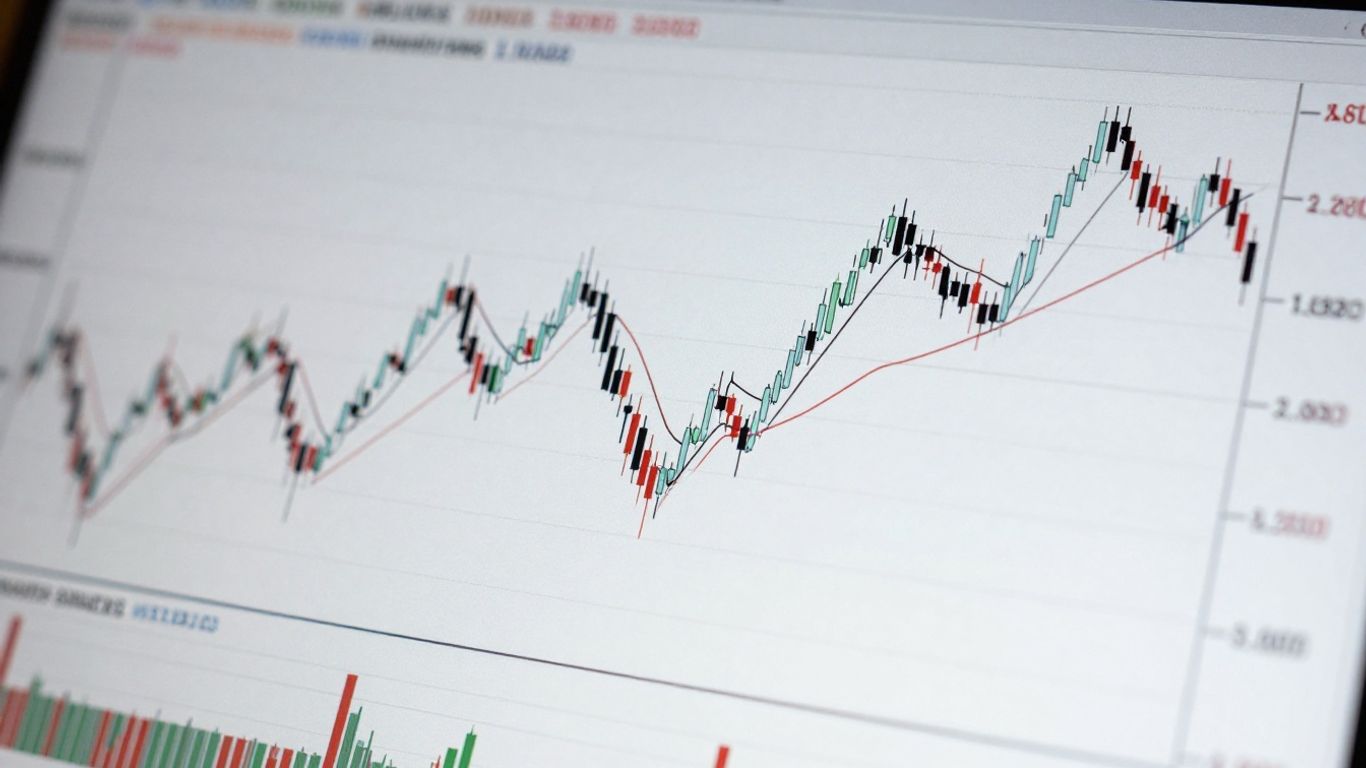
Alright, so we’ve talked about trends and structure, but now let’s get into something really practical: using key levels. Think of these levels as important landmarks on your trading chart. They’re spots where the market has shown a tendency to pause, reverse, or even break through with some serious momentum. Understanding these zones is like having a map for where price might go next.
Identifying Support And Resistance Zones
Support and resistance aren’t just random lines on a chart; they’re areas where buying or selling pressure has historically been strong enough to change the direction of price. You can spot them by looking at past price action. Where has the price bounced off multiple times? Those are your potential support levels. Where has it struggled to go higher? That’s your resistance. It’s not always a single, exact price, either. Sometimes it’s more of a zone, a small range where price has reacted. We’re talking about areas like previous highs and lows, or even round numbers that traders tend to watch. Using higher timeframes, like the daily or weekly chart, can give you a clearer picture of these significant zones mastering price action trading at key levels.
Trading Breakouts From Consolidation
When price gets stuck in a tight range, it’s called consolidation. It’s like the market is taking a breather before making its next big move. Trading breakouts means you’re looking for price to punch through the top of this range (resistance) or drop below the bottom (support). The trick here is to wait for a strong move, often with increased volume, to confirm the breakout. You don’t want to jump in too early on a fakeout. After a breakout, price sometimes comes back to test that broken level. This ‘retest’ can be a great spot for an entry if it holds.
Spotting Reversals At Key Levels
This is where price action really shines. Instead of just assuming a level will hold, you watch how price behaves when it gets there. Are sellers stepping in strongly at resistance? Or are buyers jumping in at support? Candlestick patterns are your best friend here. A ‘pin bar’ (or hammer/shooting star depending on where it forms) is a classic signal. It shows a strong rejection of a price level. If price hits a support level and forms a bullish pin bar, it’s a good sign that buyers are taking control. Conversely, a bearish pin bar at resistance suggests sellers are stepping in. You want to see price action confirm the level’s validity, not just guess essential tips for trading key price levels.
Here’s a quick look at what to watch for:
- Support Levels: Look for price to stall or bounce upwards. Bullish candlestick patterns here are good confirmation.
- Resistance Levels: Watch for price to stall or reverse downwards. Bearish candlestick patterns are your signal.
- Breakouts: Price moving decisively through a level with conviction. Look for confirmation on the retest.
It’s easy to get excited when price approaches a key level, but patience is key. Don’t just enter a trade because price is near support or resistance. Wait for the price action to tell you what’s happening. Let the market show its hand before you commit your capital.
Effective Trade Entry And Exit Strategies
Getting your timing right in the market is a big deal for any trader. Price action, which is basically watching how prices move, can really help you nail those entries and exits, making your trades sharper and more effective. We’re going to look at some ways to get better at this.
Timing Market Entries With Price Action
Figuring out the best time to get into a trade is key. Price action helps here by letting you see what the market’s been doing and what it might do next. You can look at where prices have stopped or reversed before – these are your support and resistance levels. Trading near these spots can give you a better chance at a good outcome because prices often pause or turn around there. It’s also smart to use these levels for your stop-loss orders, which helps limit how much you could lose.
- Identify Key Support and Resistance: Look at past price charts to find levels where the market has bounced or reversed.
- Watch Candlestick Patterns: Patterns like hammers, pinbars, or engulfing candles near these levels can signal potential moves.
- Check Trend Strength: See how strong the current trend is. Entering trades when momentum is high usually works out better.
- Monitor Breakouts and Pullbacks: Look for prices breaking out of sideways ranges or pulling back to a trendline before continuing.
- Use Multiple Timeframes: Check the bigger picture on a daily chart, then zoom into a shorter timeframe like an hour to find a precise entry point.
The goal is to improve your market entries and, ultimately, boost your chances of success. It’s about working with the larger market flow instead of trying to predict a turning point too early.
Exiting Trades Using Candlestick Rejections
Knowing when to get out of a trade is just as important as knowing when to get in. Sometimes, a trend starts to weaken, and you can spot this with candlestick patterns. For instance, after a long move, if you see candles with long wicks pointing against the trend, it can be a sign that the momentum is fading. These wicks show where sellers (or buyers) tried to push the price but couldn’t hold it there. If you’re in a trade and see these rejection signals near a key level, it might be time to consider closing your position and taking your profits. This is a good way to exit trades using price action signals.
Managing Trades With Outside Bars
An outside bar is a pretty reliable pattern that can give you clues about where the market might go next, especially when it comes to exiting trades. This pattern happens when one candle completely engulfs the previous one, both in its high and low. If you see a bearish outside bar after an uptrend, it could signal that sellers have taken control and it might be time to exit a long trade. Conversely, a bullish outside bar after a downtrend could suggest buyers are stepping in. Paying attention to these patterns, especially when they appear at significant price levels, can help you manage your trades more effectively and avoid staying in a trade too long when the trend is about to reverse.
Advanced Price Action Trading Techniques
Trend Continuation Trading Strategies
Sometimes, the market just wants to keep going in the same direction. Instead of trying to catch a reversal, we can look for ways to hop on a moving train. This is where trend continuation strategies come in. Think about it: if a stock has been climbing steadily, why assume it’s about to crash? We can look for signs that the trend is still strong and find good spots to get in. One way to do this is by watching for pullbacks within an established trend. When the price takes a little breather, maybe dips back towards a previous support level in an uptrend, and then starts moving up again, that can be a signal to join the ride. We’re not trying to predict the top or the bottom; we’re just trying to catch more of the existing move. It’s about patience and waiting for the market to give you a clear signal that the trend is still alive and kicking.
Reversal Trading Patterns
Okay, so sometimes the market does change its mind. That’s where spotting reversals becomes important. These are the moments when a strong trend starts to fizzle out and a new one begins. It’s like watching a big ship turn around – it takes time and effort. We look for specific chart formations and candlestick signals that suggest the buyers are losing control in an uptrend, or the sellers are losing steam in a downtrend. Think about patterns like double tops or bottoms, or head and shoulders formations. These aren’t guarantees, of course, but they give us clues. Candlesticks can also be big helpers here. A bearish engulfing pattern at the top of an uptrend, or a bullish hammer at the bottom of a downtrend, can be strong hints that a change is coming. The key is to wait for confirmation – don’t jump in just because you think a reversal is happening. Wait for the price to actually start moving in the new direction.
Trading Without Relying On Indicators
This is the heart of price action, right? We’re not glued to our RSI or MACD lines. While those tools can be useful for some, relying solely on them can sometimes lead you astray. Indicators are often lagging, meaning they show you what has already happened. Price action, on the other hand, is happening now. By focusing on the raw price movement, the highs, the lows, the closes, and how they form patterns on the chart, we get a direct view of market sentiment. It’s about reading the story the price is telling you. This means paying close attention to support and resistance levels, trendlines, and candlestick formations. It takes practice, for sure, but when you start to see the market purely through price, it feels like you’ve got a clearer picture. It strips away the noise and lets you focus on the actual supply and demand dynamics playing out in real-time. This approach helps you understand market dynamics more directly.
Here’s a quick look at what to focus on:
- Candlestick Patterns: Look for specific formations like dojis, engulfing patterns, hammers, and shooting stars. These tell a story about the battle between buyers and sellers within a single period.
- Chart Patterns: Recognize classic patterns like triangles, flags, pennants, and head and shoulders. These often signal continuations or reversals.
- Support and Resistance: Identify key price levels where the market has historically paused or reversed. These zones are critical for entry and exit decisions.
- Trendlines: Draw lines connecting successive highs or lows to visualize the trend’s direction and potential turning points.
When you strip away all the indicators, you’re left with the pure, unadulterated movement of price. This is where the real story of supply and demand unfolds. Learning to read this story directly is what separates many successful price action traders from the rest. It’s about developing an intuition for the market’s flow, based on observable price behavior rather than calculated signals.
Integrating Psychology And Risk Management
Okay, so you’ve got the charts looking good, you’re spotting trends, and you’re feeling pretty confident about your price action moves. That’s awesome. But here’s the thing, and it’s a big one: all the technical skill in the world won’t help much if your head isn’t in the right place. Trading isn’t just about reading charts; it’s a mental game, plain and simple. And if you’re not managing your money right, one bad trade can wipe out your progress.
Essential Risk Management Tips
This is where you protect your capital. It’s not about making a million bucks on every trade; it’s about staying in the game. Think of it like this: you wouldn’t bet your entire savings on a single lottery ticket, right? Trading should be similar.
- Set Stop-Losses Religiously: Seriously, this is non-negotiable. A stop-loss is your safety net. It automatically closes your trade if the price moves against you beyond a certain point, limiting how much you can lose. Always know your exit point before you even get in.
- Risk Only a Small Percentage Per Trade: Most pros suggest risking no more than 1-2% of your total trading capital on any single trade. If you have $10,000, that’s $100-$200 max risk. This prevents one or two bad trades from sinking your account. It’s about survival and consistency.
- Aim for a Good Risk-Reward Ratio: Don’t just look at winning; look at how much you can win versus how much you might lose. A common target is a 1:2 or 1:3 ratio, meaning for every $1 you risk, you aim to make $2 or $3. This means you don’t have to win every trade to be profitable. Check out essential tips for price action trading for more on this.
Cultivating a Disciplined Trading Mindset
Emotions are the enemy of a good trader. Fear, greed, hope, frustration – they can all lead you to make impulsive decisions that go against your trading plan. Developing discipline means sticking to your strategy even when it feels tough.
- Have a Trading Plan and Stick to It: This plan should cover your entry rules, exit rules, risk management, and even what markets you’ll trade. When you have a clear plan, you have a guide to follow, reducing the need for snap decisions.
- Accept Losses: Losses are a part of trading. Every trader, even the best ones, takes losses. The key is not to avoid them entirely, but to manage them so they don’t derail you. Don’t let a loss make you chase the market or revenge trade.
- Be Patient: Sometimes the best trade is no trade at all. Don’t feel like you have to be in the market all the time. Wait for high-probability setups that fit your criteria. Patience is a virtue that pays off in the long run.
Trading without a solid psychological foundation and strict risk controls is like building a house on sand. It might look okay for a while, but eventually, the waves will come, and it will crumble. You need that strong base to withstand the market’s inevitable ups and downs.
Learning From Trading Mistakes
Every trader makes mistakes. The difference between a struggling trader and a successful one is what they do after a mistake happens. Instead of beating yourself up, treat each error as a learning opportunity. Keep a trading journal where you document your trades, including your reasoning, the outcome, and what you could have done differently. This process helps you spot patterns in your own behavior and refine your approach. It’s about continuous improvement, not perfection. Remember, mastering price action is a journey, and understanding the mental side is just as important as understanding the charts themselves. For a broader view on price action, consider exploring expert advice on price action chart patterns.
Wrapping It Up
So, we’ve gone over how price action trading is really about watching what the price itself is doing, plain and simple. It’s not about chasing fancy indicators or trying to guess the future. By learning to read the charts, understanding support and resistance, and spotting those candlestick patterns, you get a much clearer picture of what the market’s up to. It takes practice, for sure, and you’ve got to manage your risk, but focusing on the price action can really help you make smarter moves. Keep practicing, keep learning, and you’ll start to see the market in a whole new light.
Frequently Asked Questions
What exactly is price action trading?
Price action trading is like being a detective for the stock market. Instead of using fancy tools like indicators, you just look at the price chart itself. You study how the price has moved up and down in the past and right now to guess where it might go next. It’s all about reading the story the price is telling you.
Why should I bother with price action if there are indicators?
Think of indicators as hints, but price action is like seeing the whole picture. Indicators can sometimes be late or give confusing signals, like telling you to turn left when the road has already curved right. Price action shows you what’s happening right now, making it a more direct way to understand the market’s mood and direction.
How do I know if the market is going up, down, or sideways?
You can tell by looking at the ‘highs’ and ‘lows’ on the price chart. If the highs and lows are getting higher, it’s an uptrend (going up). If they’re getting lower, it’s a downtrend (going down). If the price is just bouncing back and forth between two levels, it’s moving sideways, which we call a ‘ranging market’.
What are ‘support’ and ‘resistance’ levels?
Imagine support as a floor and resistance as a ceiling for the price. Support is a price level where buyers tend to step in and stop the price from falling further. Resistance is a price level where sellers usually show up and prevent the price from going any higher. Watching how the price acts around these levels is super important.
When is the best time to buy or sell a stock using price action?
Timing is key! You want to get in when the price action signals a good opportunity. This might be when the price bounces off a support level in an uptrend, or when it breaks through a resistance level with strong momentum. It’s about finding those moments where the odds are in your favor, often confirmed by specific candle patterns.
Is price action trading difficult to learn?
Learning the basics of price action is quite straightforward, like learning the alphabet. However, becoming really good at it takes practice and patience, similar to becoming a great writer. You need to study charts regularly, learn from your mistakes, and develop a disciplined approach to trading. It’s a journey, not a race!