Here are the main points to remember if you’re thinking about swing trading CFDs in Australia. It’s good to have these in mind as you learn more.
Key Takeaways
- Swing trading means holding positions for a few days to a few weeks to catch price swings, not for the long term like investing.
- Contracts for Difference (CFDs) let you trade price movements without owning the actual asset, and you can bet on prices going up or down.
- Leverage can boost your profits but also your losses, so it’s a tool that needs careful handling.
- Australia has rules set by ASIC to protect traders, like limits on how much leverage you can use.
- Always have a trading plan, use stop-loss orders to limit potential losses, and keep records of your trades for tax and learning.
Understanding Swing Trading CFDs in Australia
What is Swing Trading?
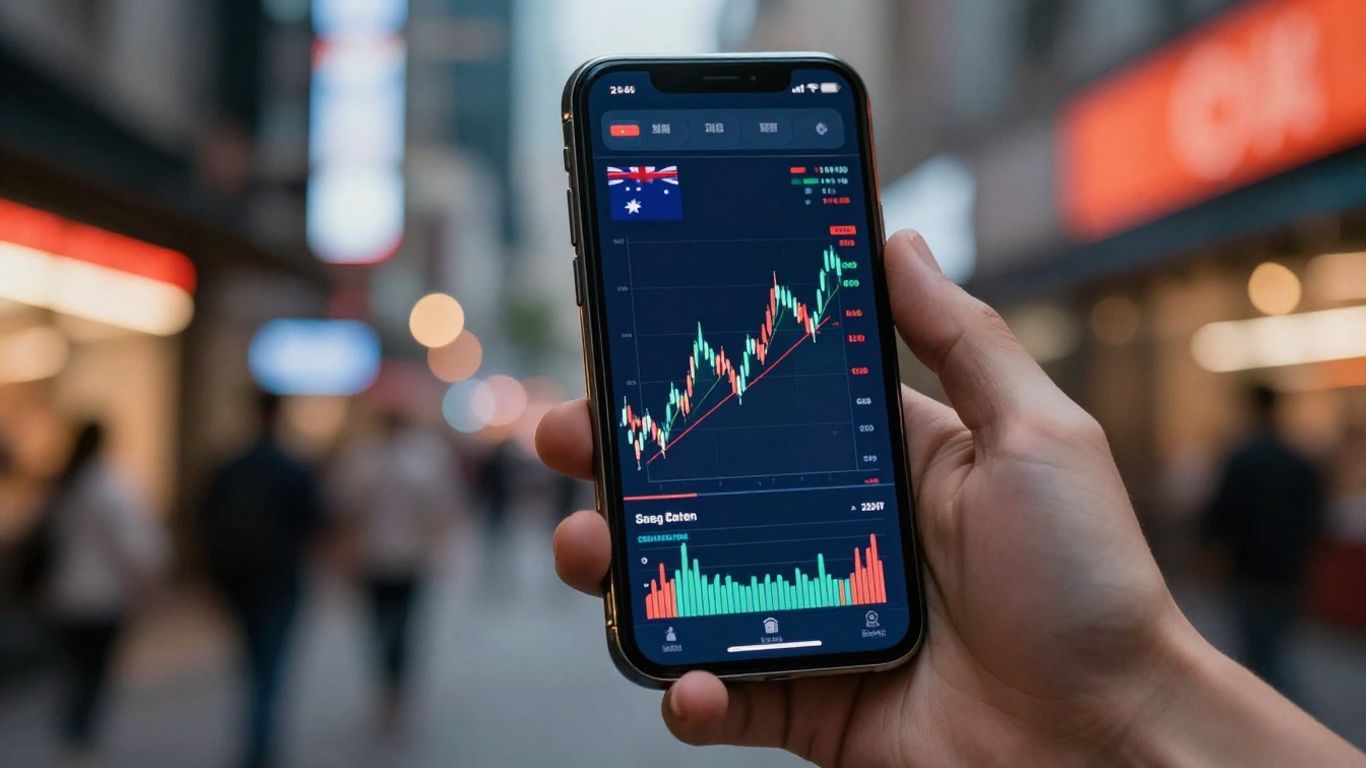
Swing trading is a style where traders try to capture gains in a stock (or any financial market) over a period of days, weeks, or sometimes months. It’s not about holding onto a stock for years, nor is it about making trades in a single day. Think of it as catching the ‘swings’ in the market. You’re looking for those medium-term moves, not the tiny fluctuations or the long-term trends. It requires a bit more patience than day trading, but you’re not tying up your capital for years either. It’s a middle ground, really.
Swing Trading vs. Day Trading
So, how does this differ from day trading? Well, day traders aim to get in and out of positions within the same trading day. They’re looking for smaller, quicker profits and often make many trades. Swing traders, on the other hand, hold positions overnight, sometimes for several nights. This means they’re exposed to different risks, like overnight news events, but they also have the potential to capture larger price movements. It’s a different mindset and requires different strategies. For beginners, understanding this difference is pretty important before you even think about placing a trade.
Key Differences for Beginners
When you’re just starting out with CFDs in Australia, there are a few things to keep in mind about swing trading.
- Time Horizon: Swing trading involves holding trades for days or weeks, whereas day trading is all about closing positions before the market closes.
- Profit Targets: Swing traders generally aim for larger profit targets per trade compared to day traders.
- Market Analysis: Both styles use technical analysis, but swing traders might also pay more attention to broader market sentiment and economic news that could affect prices over a few days.
- Risk Management: Because you’re holding positions longer, managing risk is still super important. You’ll want to use tools like stop-loss orders to protect yourself.
Swing trading with CFDs means you’re betting on price movements over a few days or weeks. You don’t own the actual asset, just a contract that follows its price. This gives you flexibility, but also means you need to be smart about managing your money and understanding the risks involved. It’s a popular approach for many traders looking for a balance between quick trades and long-term investing.
For those new to this, getting a handle on how CFDs work is the first step. You can explore how CFDs function to get a better grasp. Developing a solid trading strategy is also key to success in swing trading.
Getting Started with CFDs for Beginners
So, you’re keen to jump into swing trading using Contracts for Difference (CFDs) here in Australia. Before you even think about placing a trade, let’s get a handle on what CFDs actually are. Think of them as agreements between you and your broker to exchange the difference in the value of an asset between the time the contract is opened and when it’s closed. You’re not actually buying or selling the underlying asset itself. This is a pretty big deal because it means you don’t have to worry about things like stamp duty on shares or the hassle of physical delivery. It’s all about speculating on price movements.
What are Contracts for Difference (CFDs)?
CFDs have become quite popular in Australia since they first popped up around 2002. They give you access to a whole bunch of markets, both here and overseas, without needing to own the actual shares or commodities. It’s a way to trade on price changes.
No Ownership, Just Trading
This ‘no ownership’ aspect is a real game-changer for beginners. Because you’re trading a contract, not the real thing, you sidestep a lot of the usual paperwork and ownership responsibilities. This means you can focus purely on the price action. It’s a simpler way to get exposure to markets like the ASX 200.
Trading in Any Market Direction
One of the most talked-about features of CFDs is the ability to profit whether the market is heading up or down. If you reckon a price is going to climb, you can ‘go long’. If you think it’s going to drop, you can ‘go short’. This flexibility means you’ve got more opportunities to find trades, regardless of the overall market sentiment. It’s like being able to bet on both outcomes, which can be pretty handy when you’re starting out.
Here’s a quick rundown of what that means:
- Going Long: You buy a CFD if you expect the price of the underlying asset to increase.
- Going Short: You sell a CFD if you expect the price of the underlying asset to decrease.
- Profit/Loss: Your profit or loss is the difference between the opening and closing price of the contract, multiplied by the number of units traded.
When you’re trading CFDs, you’re essentially betting on the direction of price movements. This means you can potentially make money when prices rise or fall, which is a key difference from traditional share trading where you typically only profit when prices go up. It’s a powerful tool, but it also means you need to be aware of the risks involved in predicting market direction.
Leverage and Margin Explained
Alright, let’s talk about leverage and margin when you’re trading Contracts for Difference (CFDs) here in Australia. These two concepts are pretty central to how CFD trading works, and understanding them is key before you even think about placing a trade.
Amplifying Your Trading Potential
Think of leverage as a way to control a larger amount of an asset with a smaller amount of your own money. It’s like using a small deposit to control a much bigger position. For example, if you have $1,000 and your broker offers 10:1 leverage on a particular CFD, you can effectively control a position worth $10,000. This means that any profits you make could be significantly larger than if you were trading with just your initial $1,000. It’s a big part of why CFDs can be attractive, allowing you to potentially get more bang for your buck. This can be a real game-changer, especially if you’re looking to make the most of smaller market movements. You can explore different trading strategies that utilise this amplified buying power.
Understanding Margin Requirements
So, if you’re controlling a $10,000 position with only $1,000 of your own money, what’s the other $9,000? That’s where margin comes in. Margin is essentially the deposit you need to put down to open and maintain that leveraged position. It’s not a fee, but rather a portion of the total trade value that your broker sets aside as collateral. The margin requirement is usually expressed as a percentage of the total trade value. For instance, if the margin requirement is 5%, you’d need to deposit $500 to control a $10,000 position.
Here’s a quick rundown:
- Initial Margin: The amount needed to open a trade.
- Maintenance Margin: The minimum amount of equity you need to keep in your account to keep the position open.
- Margin Call: If your account equity drops below the maintenance margin, your broker might issue a margin call, asking you to deposit more funds or close some positions.
The Double-Edged Sword of Leverage
Now, here’s the important bit. While leverage can amplify your profits, it can just as easily amplify your losses. If that $10,000 position you’re controlling moves against you by just 1%, you’ve lost $100. But because you only put down $1,000 initially, that $100 loss represents 10% of your initial capital. If the market moves significantly against your position, you could lose your entire deposit very quickly, and in some cases, even more.
It’s vital to remember that leverage magnifies both gains and losses. While it allows you to trade larger positions with less capital, it also means that adverse market movements can lead to substantial losses, potentially exceeding your initial investment. Always be aware of the risks involved and never trade with money you can’t afford to lose.
Because of this risk, Australian regulators have put limits on the leverage retail traders can access. For example, ASIC has capped leverage at 30:1 for major forex pairs and 2:1 for cryptocurrencies. It’s a good idea to familiarise yourself with these leverage restrictions to understand what’s available to you.
Markets Available for CFD Trading
Australian Stock CFDs
So, you’re keen to trade Aussie shares but don’t want the hassle of actually owning them? That’s where stock CFDs come in. You can get a piece of the action on companies listed on the ASX, like BHP or CSL, without needing to buy the shares outright. It’s a pretty straightforward way to speculate on the price movements of these big players.
Index CFDs: ASX 200 and Beyond
Instead of picking individual stocks, you might prefer to bet on the overall direction of the market. That’s where index CFDs shine. The S&P/ASX 200 (often called the ASX 200) is the big one here in Australia, representing the top 200 companies. But why stop there? You can also trade CFDs on global indexes like the Dow Jones or the NASDAQ. It’s a way to get a feel for how the whole market is doing, not just one company. Trading index futures can be a popular strategy.
Forex and Commodity CFDs
Fancy a flutter on currency movements? The foreign exchange market is massive, and you can trade major currency pairs involving the Australian dollar, like AUD/USD or AUD/NZD. These are usually pretty liquid, meaning it’s easier to get your trades in and out. Beyond currencies, you can also trade CFDs on commodities like gold, silver, and crude oil. Think of it as betting on the price of these global resources.
Cryptocurrency CFDs
Yep, even the wild world of cryptocurrencies has made its way into CFD trading here. You can trade CFDs on popular digital coins like Bitcoin and Ethereum. It gives you exposure to the crypto market’s ups and downs without needing to set up a separate digital wallet or worry about the technical side of owning the actual coins. It’s a way to play in that volatile space.
When you trade CFDs, you’re not actually buying or selling the underlying asset. You’re entering into a contract with your broker to exchange the difference in the price of that asset between the time the contract is opened and when it’s closed. This means you can trade on price movements without the complexities of ownership.
Here’s a quick rundown of what you can trade:
- Australian Shares: Individual companies listed on the ASX.
- Major Indices: Like the ASX 200, Dow Jones, and NASDAQ.
- Forex: Currency pairs, including those with the AUD.
- Commodities: Gold, oil, silver, and more.
- Cryptocurrencies: Bitcoin, Ethereum, and others.
Regulation and Safety in Australia
Trading Contracts for Difference (CFDs) in Australia means you’re operating within a market that’s watched pretty closely. The main watchdog here is the Australian Securities and Investments Commission, or ASIC. They’ve put some rules in place to try and keep things fair and safe for everyday traders.
ASIC Oversight of CFD Trading
ASIC keeps an eye on CFD providers to make sure they’re playing by the rules. They’ve done reviews in the past and found some issues, like brokers’ websites not being totally clear about what they were offering. This oversight is designed to protect you from misleading promotions and dodgy practices. They’ve even managed to get millions of dollars in refunds for investors who were misled. ASIC’s product intervention order for CFDs is set to expire in May 2027, but they’re planning to consult with the industry about what happens next. You can find more details on ASIC’s actions.
Leverage Restrictions for Retail Traders
One of the big things ASIC has done is put limits on how much leverage retail traders can use. This is because leverage, while it can boost your potential profits, can also seriously ramp up your losses. The rules are pretty specific:
- Major currency pairs: Maximum leverage of 1:30.
- Minor currency pairs, gold, and major indices: Capped at 1:20.
- Commodities (other than gold) and minor stock indices: Limited to 1:10.
- Individual shares: Maximum leverage of 1:5.
- Cryptocurrencies: Capped at 1:2.
These limits are there to stop you from taking on more risk than you can handle, especially when you’re just starting out.
Negative Balance Protection
Another important safeguard is negative balance protection. Basically, this rule means you can’t lose more money than you’ve actually put into your trading account. If the market moves against you really fast and your account balance drops too low, your positions will be automatically closed out. This stops you from owing money to your broker, which can happen in very volatile markets without this protection. It’s a pretty big deal for keeping your risk contained.
Essential Trading Practices for Beginners
Alright, so you’re getting into swing trading with CFDs here in Australia. That’s pretty cool. But before you jump in headfirst, let’s chat about a few things that’ll keep you on the right track. It’s not just about picking a stock and hoping for the best, you know?
Developing a Trading Plan
Think of a trading plan like a roadmap. Without one, you’re just wandering around. It should clearly state what you’re looking for in a trade, when you’ll get in, and, super importantly, when you’ll get out. This isn’t just about making money; it’s about managing your risk. You’ll want to define your entry and exit points, and how much you’re willing to risk on any single trade. Sticking to your plan, even when things get a bit hairy, is key. It helps you avoid making emotional decisions, which, trust me, can be a real killer in trading.
Implementing Stop-Loss Orders
This is probably one of the most talked-about risk management tools, and for good reason. A stop-loss order is basically an instruction to your broker to close your position if the price moves against you by a certain amount. It’s your safety net. For example, if you buy a CFD at $10 and set a stop-loss at $9, your trade will automatically close if the price drops to $9, limiting your loss to $1 per unit. This stops a small loss from turning into a massive one. You’ll want to place these strategically, often below recent price lows for long positions or above recent highs for short positions, depending on the market’s direction. Using a demo account first can really help you get a feel for how these work in practice using a demo account.
The Importance of Record Keeping
Seriously, don’t skip this. You need to keep a detailed log of every trade you make. What did you buy or sell? When did you enter and exit? What was the profit or loss? Why did you take the trade in the first place? This isn’t just busywork; it’s how you learn. By reviewing your past trades, you can spot patterns. Maybe you’re consistently losing money on a certain type of setup, or perhaps you’re great at spotting trends but terrible at timing your exits. This information is gold for refining your strategy and improving your results over time. It also makes tax time a whole lot easier, which is a bonus.
Keeping good records helps you understand your own trading psychology. It shows you where you’re making mistakes, not just in terms of market analysis, but in your decision-making process. This self-awareness is what separates traders who stick around from those who don’t.
Remember, trading involves risk, and these practices are designed to help you manage that risk, not eliminate it entirely. They’re about staying in the game long enough to learn and hopefully become profitable. For more on how to approach risk management, check out strategies and risk management guidance.
Tax Implications of CFD Trading
Right, let’s talk about the tax side of things when you’re swing trading CFDs here in Australia. It’s not the most exciting topic, I know, but it’s super important to get it sorted so you don’t have any nasty surprises come tax time.
Understanding Capital Gains Tax
Generally speaking, the Australian Taxation Office (ATO) treats profits from CFD trading as capital gains. This means that if you hold a CFD position for less than 12 months, any profit you make is added to your other income and taxed at your usual marginal tax rate. There’s no discount applied here, unlike with some other investments. If you’re actively trading and treating it like a business, the ATO might see you as a trader, and your profits could be taxed as ordinary income. This is something to keep in mind, especially if you’re aiming to make regular profits from your trades. You can find more details on this from the Australian Taxation Office.
Reporting Your CFD Trades
Keeping good records is your best mate when it comes to taxes. You’ll need to track all your trades, both wins and losses. This information is what you’ll use when you fill out your annual tax return. The ATO has specific sections for reporting investment income and capital gains. If you’re classified as a trader, you’ll report your CFD activities under business income. It’s a good idea to get familiar with how the ATO wants this information presented. The tax implications for forex and CFD trading are pretty similar to how shares are treated, with the ATO focusing on profits and losses.
Here’s a quick rundown of what you might be able to claim:
- Trading Costs: Things like brokerage fees, platform fees, and data subscriptions.
- Interest: If you’re using borrowed funds (margin loans) for your trading, the interest paid might be deductible.
- Education: Expenses for courses or resources aimed at improving your trading skills, though there are specific conditions for this.
It’s really about being organised. If you’re not keeping track of every buy and sell, every profit and loss, you’re making life harder for yourself and potentially missing out on deductions. Think of it like keeping a diary, but for your money. The more detail you have, the clearer the picture becomes, and the easier it is to sort out your tax obligations accurately.
Remember, tax laws can change, and everyone’s situation is a bit different. If you’re unsure about anything, it’s always best to have a chat with a qualified tax professional. They can give you advice tailored to your specific circumstances.
Conclusion
So, swing trading CFDs in Australia can be a way to get involved in the markets, but it’s not for everyone. It takes time to learn and practice. Remember, you can lose money, so only trade with cash you can afford to lose. Always do your homework, stick to your plan, and keep track of your trades. If you’re just starting, maybe try a practice account first before jumping in with real money. It’s a bit like learning to ride a bike – you might wobble a bit at first, but with practice, you can get the hang of it.
Frequently Asked Questions
What exactly is swing trading?
Swing trading is a way to trade where you hold onto your trades for a few days or maybe a couple of weeks. The idea is to grab onto the ‘swings’ or movements in the market price, kind of like catching a wave at the beach. You’re not trying to ride the whole ocean, just the good waves that come along.
What’s the difference between swing trading and day trading?
Day trading means you buy and sell within the same day, closing all your trades before the market shuts. Swing trading is more relaxed; you can keep trades open overnight or even over the weekend. This means swing traders don’t need to be glued to their screens all day like day traders do.
Are CFDs risky?
Yes, CFDs can be risky, especially because of something called leverage. Leverage lets you trade with more money than you actually have in your account, which can make your profits bigger, but it can also make your losses much bigger, too. It’s like using a magnifying glass – it makes things look bigger, both good and bad.
Do I actually own the shares when I trade CFDs?
Nope, you don’t own the actual shares or assets when you trade CFDs. You’re just trading a contract that follows the price of that asset. This means you don’t have to worry about things like dividends or shareholder rights, and you don’t pay stamp duty on them.
Is CFD trading allowed in Australia?
Yes, it is! CFD trading is legal in Australia, but it’s watched over by a government body called ASIC. They have rules in place to try and keep things fair and safe for traders, like limiting how much leverage brokers can offer to regular folks.
Do I have to pay tax on CFD profits in Australia?
Generally, yes. If you make money from trading CFDs, the Australian Tax Office (ATO) usually sees it as a capital gain. This means you’ll likely have to pay Capital Gains Tax on your profits when you do your yearly tax return.